When I was in my early 20s and a graduate student at Harvard University, I made a conscious decision to attend as many concerts, plays, operas, cultural events, lectures, and academic conferences as my busy schedule would permit. Many of those activities resulted in little more than a few pleasant hours spent apart from my austere graduate student carrel in the bowels of Widener Library. Such experiences were recorded in my journal and then quickly forgotten. A few events, however, led to connections with people or ideas so significant that they became the basis for life-changing lessons since shared with friends and family, students and audiences around the globe. In this blog I shall relate a true story and the career-enhancing lesson learned. In a later blog I shall explain in more detail how and why young professionals (beginning teachers, in particular) should make connections to diverse groups of people.
The Anecdote: During the second semester of my graduate studies in romance languages I learned that Mstislav Rostropovich (1927 –2007), the internationally acclaimed Russian cellist and conductor, would be giving a free master class in cello performance in Sanders Theatre on campus. I went early enough to get a seat and enjoyed a once-in-a-lifetime event. When I entered the theater, the stage was empty except for a chair, a grand piano and bench, and a stand with microphone. Soon it was announced that two young cellists, both Harvard undergraduates, would be playing for Rostropovich, who would teach them by critiquing their performance.
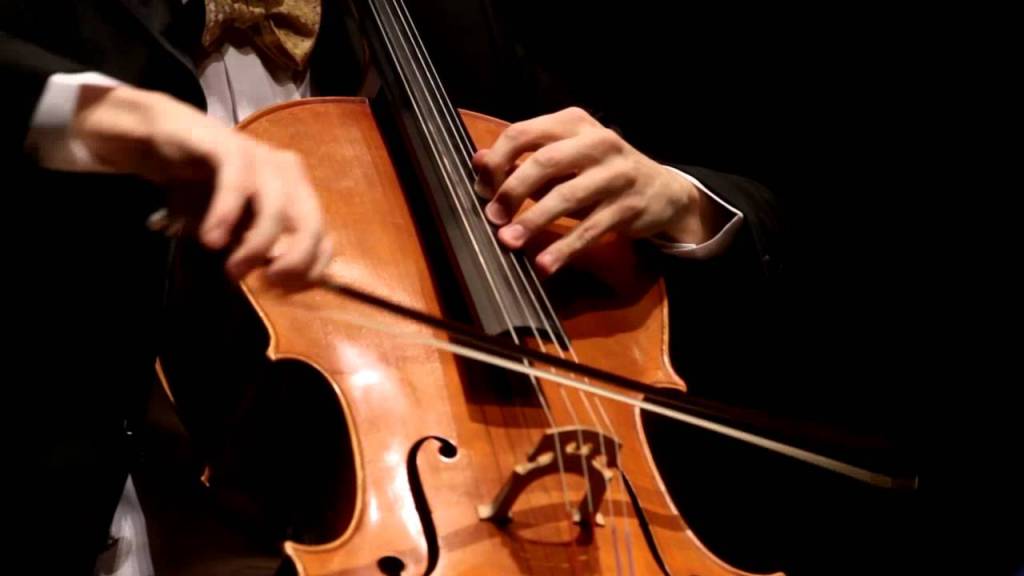
The first young man, reserved and dignified, walked on stage with his cello. Through an interpreter Rostropovich inquired as to the piece the student would be performing. The great Russian cellist, who was also a superb pianist and had mastered the accompaniment for the entire standard cello repertoire, immediately sat down at the piano. He played from memory the introduction and accompaniment to the piece the student had selected. The young cellist played his notes dexterously and precisely and, as far as I could judge, with impressive technique. As a musician, he struck me as precision personified. We clapped politely when the cellist finished and waited for Rostropovich’s critique. The maestro complimented the young man on his technical proficiency and then explained that it was not enough simply to play the notes with precision. Great classical music demanded more depth of feeling. It was not sufficient simply to play every note correctly; the performer needed to express the emotion intended by the composer. Rostropovich then took over the cello and played the same piece but with a depth of feeling that brought the audience to its feet. The notes were identical to those played earlier, but the music now resonated in our souls.
The second cellist, a Chinese-American, came on stage. His name was Yo-Yo Ma. Already he was a celebrity on and off campus, but nothing of the magnitude of the much older Russian cellist. Like the first student, Yo-Yo told Rostropovich what he would be playing. Once again, the maestro sat at the piano and, without any written music, brilliantly accompanied the cellist. The difference in students was striking. Yo-Yo Ma was clearly a prodigy accustomed to performing on stage. He played to the audience and performed with intensity, verve, and dramatic flair. He put his entire body into his playing, and the audience was responding enthusiastically to his dashing personality when Rostropovich suddenly stopped the young cellist mid-measure.
What was wrong? Why did he stop what appeared to be a brilliant performance? What would the great Rostropovich say about this promising artist? The Russian noted the obvious: Mr. Ma did not lack in dramatic ability; his performance was nothing if not theatrical. But Rostropovich shocked the audience by stating that Ma had “no center to [his] tone.” In music, “tone” refers to the quality or the character of a sound. Rostropovich explained, as best I can recall, that the tone one ideally should strive for is not one overshadowed by the performer’s facial expressions or body language. The tone’s center is found in the sound vibrating through the strings themselves. He then took Yo-Yo Ma’s place and performed a section of the same piece with much of the physical demeanor and dignity of the first cellist but with a more profound depth of sound than Yo-Yo Ma had initially produced. The strings fairly sang through the exquisite phrasing, the diminuendo and crescendo that the maestro produced. The older Rostropovich was clearly, to employ Dante’s phrase honoring his own classical models, “the master of those who know.”
The Lesson: Yo-Yo Ma learned a humbling lesson that day and soon gained the center of his tone. The lesson that I learned has greatly influenced the way that I have tried to conduct my career as a professional educator. Although my goal has always been to qualify as a master teacher and not as a professional musician, I realized from witnessing Rostropovich critique two fine cellists that I needed in my life’s work to meld precision of thought and speech with the right “tone” (i.e., feeling and spirit). To become an influential teacher, I embraced the idea that one must constantly engage in a balancing act. It is not enough to know and present facts, however accurate and important; one must also mine those facts for meaning and application to the lives of students. Facts and figures must be presented in a way that fosters dialogue, questions, and further thought. After all, we learn best by asking questions and questioning answers. At the same time, a great teacher must avoid the extreme of focusing solely on the dramatic and theatrical in the presentation of material. The ancient ideal, espoused by Horace, was correct: teaching, like literature, should be both dulce et utile. It should inform and instruct but also please and delight.
How does one maintain that balancing act between “sweet” (dulce) and “useful” (utile) in teaching a class or running an academic program? First, it requires that the teacher engage in thoughtful planning, pondering such questions as these: What do I want my students to take away from my lesson? How do I inspire them to remember and apply the principles I am trying to teach? What examples shall I use to dramatize my points? Second, master teachers will employ a variety of “high-impact practices” in presenting their material. They might distribute study questions or case studies in advance and encourage the formation of study groups outside of class. They might insist on small group work in class. They might “flip the classroom” and have students come prepared to present certain aspects of the material. Third, teachers must evaluate what students are learning and be prepared to modify their approach to teaching when they do not achieve the results they desire. In other words, master teachers (or performers or administrators) must be model learners themselves.
One day two fine young musicians performed for a world-renowned cellist. Both students had been chosen with care, and they represented their alma mater with honor. Each, however, needed to learn a lesson custom-made for him. One needed to add a crescendo of emotion and feeling to his somewhat cold precision. The other required a reminder that certain aspects of personality might require a diminuendo with a simultaneous crescendo (or focus) on the quality of tone. It is only through such balancing acts that the beauty of the music will vibrate in the souls of the listeners, ennobling and changing them. So it is with teaching that changes lives: proper preparation is key, and balance is all.
 The Many Worlds of Madison Sowell
Leave a comment