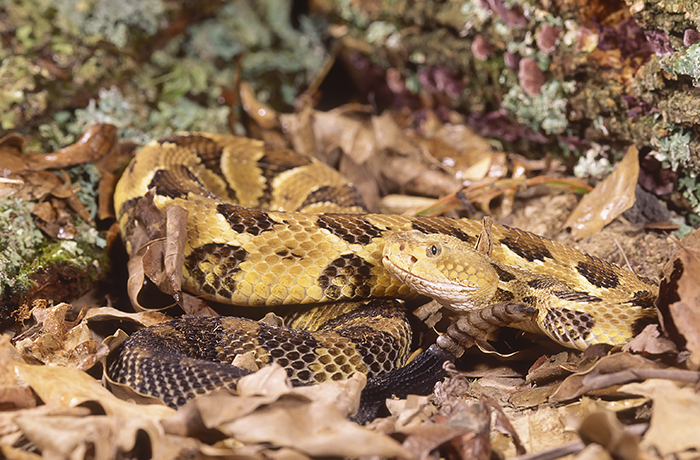
When I was born in the early 1950s, we lived in a rectangular wooden house that was a converted honkytonk with badly scuffed hardwood floors. Surrounded by two or three acres of pasture, the former dance hall sat in a small grove of tall oak trees that I loved to climb. Located in a rural setting just over two miles outside of Piggott, Arkansas, our property was bordered by ditches that filled quickly with water when it rained. The water attracted snapping turtles and snakes of various types, some harmless and some venomous, such as the water moccasin. Since I was too young to recognize the difference between poisonous and non-poisonous snakes, my father, who had waited 65 years to generate a son to carry on his name, made the decision to scare the daylights out of me when it came to all snakes. He told me tales about people dying agonizing deaths from close contact with a rattlesnake–even after the snake was dead. In one story a man cut off the head of a rattler just as it struck his boot. The next day the man went to put his boot back on, and a single fang of the snake, which had become embedded in the leather, pierced or scratched his skin; the man died a painful death the day after the snake was killed. If I ever saw a snake when I was playing in the yard or pasture, I was under strict instructions to run for my life and seek refuge inside the house.
One day when I was four or five years old, Dad came home from our farm in the hills outside Rector, Arkansas, carrying a gallon-size glass jar with a metal lid screwed tightly on. Inside, coiled around ice, was a headless skinned rattlesnake. I was horrified at the sight. Dad handed the jar to my mother and instructed her to put the dead snake in a skillet and fry it. I didn’t comprehend why he wanted her to do that; all I knew was that I didn’t want to have anything to do with that snake, alive or dead. When dinnertime arrived, we sat down at the table together and said grace. Then, to my horror, Mother placed before us a platter with the fried snake on it. Mother stated unequivocally she had no intention of eating that snake, and I loudly chimed in, “I’m not eating it either!” My father, who had a bad temper, shouted, “I killed and cleaned that snake and brought it home, and you will eat it!” He placed a piece on my plate, and I stared at it incredulously and pop-eyed. The only thing I feared more than a rattlesnake was my father, who kept a razor strop in the bathroom closet and occasionally threatened to whip me with it for any act of disobedience. (He never actually struck me with it, but I had no doubt that he could and would use it.)
That fateful night at dinner I paused, swallowed hard, stuck my fork in that feared piece of snake meat, and reluctantly took a bite. After I chewed and swallowed it, everyone looked at me for my reaction. With tears welling up in my eyes, I turned to Mother and asked with a whimper, “When do I die?” She immediately realized that, because of the fear Dad had instilled in me of all snakes, and rattlesnakes in particular, that I was assuming that every part of that serpent was poisonous and that for some unknown reason my father was trying to murder me. Mother was furious with Dad for making me taste that snake. Directing her ire at him she yelled, “Your son thinks you’re trying to kill him!” Mother reassured me that the snake’s meat was not poisonous, and Dad just laughed at the misunderstanding. Nevertheless, he didn’t make me eat any more snake meat that night or ever again. For the record, I have no recollection of what the snake meat tasted like, and my deep-seated fear of snakes remains to this day.
I’m not sure what the moral of this true story from my childhood is, but I believe that many pre-kindergarten children—not just the Amelia Bedelias and autistic children of the world—often take what adults say as the literal truth or believe in their parents’ “white lies” long after the children finish elementary school. “Storks bring babies.” “Tell a lie and your nose will grow longer!” “Step on a crack and break your mother’s back!” “If you cross your eyes, they’ll stay that way.” “Carrots make you see in the dark.” “If you touch a frog, you’ll get warts.” “Clean your plate or a child will die from starvation in India (or Africa)!” (That one never made sense to me, as I was quite ready to send my spinach or green beans to those starving children.) In my case the warning was “Get close to any snake, and it will kill you!” The best parenting requires mothers and fathers to take the time (which many may feel that they don’t have) to explain things simply, in an age-appropriate way, so that their son or daughter doesn’t grow up with gross misperceptions or overblown fears.
 The Many Worlds of Madison Sowell
Leave a comment