Search

The Many Worlds of Madison Sowell

Author

madisonsowell

Dr. Madison U. Sowell (A.M. & Ph.D., Harvard University) has served as a university professor, accreditation reviewer, and academic administrator (Department Chair, Honors Program Director, Associate Dean of Undergraduate Education, and Provost/Vice President of Academic Affairs). He has published, edited, and co-authored several books and approximately 150 scholarly articles, encyclopedia entries, personal essays, and book reviews. He also owns and oversees the operations of Marshall-Sowell Farms in Clay County, Arkansas.

BLOG #24: THE ZINNIA AND THE BUMBLEBEE (August 10, 2024)

In these sweltering dogdays of August, I am reminded of a summer over thirty years ago when my wife Debra and I were caring for my half-sister, whom we affectionately referred to as Aunt Mari Lou. Over forty years older than I, she was the first of three elderly relatives to whom we would open our home during our marriage, attending to the needs of each in their dotage. Her arrival proved a major adjustment for our little family, as she came after breaking a hip and required assistance in bathing and dressing. Her memory was starting to fade, and she also could be finicky about what she liked to eat. Neighbors and friends who knew of our new family dynamics often reached out, asking how they could lighten our burden. Usually, we politely declined assistance and stressed that we had professional aides who came a few times a month to address pressing needs. Occasionally, however, someone would offer something that seemed the perfect gift for the moment, as I shall explain hereafter.

A graduate of the University of Arkansas in English and piano performance and a stunning beauty in her youth, Aunt Mari Lou had always appreciated the finer things of life: great literature, classical music, fine art, fashionable clothes, and specialty foods. Throughout her eighty-five years she had especially delighted in flowers—the more colorful, the better. As an artist, she had often fashioned floral arrangements and occasionally used bouquets as the subject of her watercolors. After she came to live with us, an esteemed university colleague and close friend, Dr. Glade Hunsaker, with whom I had team taught college courses, became aware of our home situation and of Aunt Mari Lou’s love of flowers. One hot summer day he called and informed me that his prized zinnias had reached the pinnacle of their perfection. If I would drop by his home early the next day, he would cut one of the largest and most beautiful for Debra and me to present to Aunt Mari Lou. A zinnia, which symbolizes thoughts of friends, goodness, and lasting affection, would certainly brighten our day. I readily accepted and arranged a time when it would be mutually convenient for Debra and me to stop by his house.

At the appointed hour we drove up to the Hunsaker home, and Glade greeted us warmly. An avid gardener, he enthusiastically showed us his manicured flower garden. We were impressed by the intense colors and astounded by the colossal size of his zinnias with their showy flower heads. He chose one of the largest as his gift to Aunt Mari Lou. Several inches in diameter, the flower’s head had not yet opened its petals fully to the morning sun. Glade carefully placed the flower with its long thick stem in a simple plastic container of water and proudly presented it to Debra. He informed us that, as the flower soaked up the water and warmed in the air, its petals would open to display a special surprise: a golden center like a miniature sun. We thanked our thoughtful friend profusely for such a generous gift of self, reassuring him that we would place the flower in one of Aunt Mari Lou’s special vases and present it to her as soon as we returned home. Glade smiled benevolently and with the satisfaction that derives from knowing that a simple act of kindness will bless multiple lives—in this case cheering Aunt Mari Lou and making our day lighter, too.

As we readied ourselves to drive home, Debra elected to sit in the back seat of our compact Toyota Corolla to have enough room to steady the container of water with the glorious zinnia. The interior of the car was hot from sitting in the sun, and with the windows rolled up I turned on the air conditioner and started for home. The combination of water and the car’s heated interior was already contributing to the opening of the zinnia’s colorful petals. As we drove out of Glade’s neighborhood, we seemed to hear a very faint buzzing noise but couldn’t identify its origin. Then, as I sped up the main road to our home on Osmond Lane, pleased that a friend would share such a special gift, I heard a blood-curdling shriek emerge from the back seat. I made out the screamed alliterative word “BUMBLEBEE!!!” Hidden in the golden center of the zinnia was a previously trapped and insanely huge black-and-yellow-striped bumblebee. As I turned my head to see, the furious insect whizzed past my face and bounced off the inside of the front windshield. Debra screamed again as the bee angrily reversed course and zoomed past her toward the rear window, trying desperately to escape the confines of the car. As I tried to avoid contact with the bee, my hands jerked at the steering wheel. I simultaneously fumbled in futile attempts to roll down the car windows. Swatting at the bee and zigzagging back and forth across lanes of oncoming traffic, I appeared to be an inebriated kamikaze pilot on a suicide mission.

In an instant there flashed through my mind Glade’s benevolent face and self-satisfied smile when we had backed out of his driveway two minutes before. I thought how content he must have been based on his altruistic act of kindness. I contemplated that if we crashed head-on into an approaching car and perished, the bumblebee would escape through a broken window, and no one would ever fathom the true reason for what seemed to be the successful execution of a death wish. Ironically, Glade would be comforted that his last act before I inexplicably crashed my car was the bestowal of one of his special zinnias on an ostensibly deeply troubled colleague. He might even offer to speak at our funerals and relate his final selfless act.

With those thoughts wildly racing through my mind and my wife still screaming hysterically, I pulled over and stopped the car. We rolled down all the windows and waited expectantly for the bumblebee to exit. To our amazement he chose to remain in attack mode against the car’s rear window. Debra finally swatted him with something she found in the back seat, and the bee fell dead (or so we assumed). Exhausted and sweating from our ordeal, we returned home and presented the zinnia to Aunt Mari Lou, who was dutifully impressed. Using a tissue, I retrieved the bumblebee from the back of the car and entombed its body in our kitchen trash can. About an hour later, to our utter astonishment, the bumblebee, dazed but not dead, revived consciousness and started buzzing around the trash container. Was there to be no end to this feisty creature?

I shall not shock my readers with how I ultimately disposed of said bumblebee. Instead, I close with a reflection on the hasty conclusions we sometimes draw vis-à-vis the actions of others. Had my wife and I died in a head-on crash, some might reasonably have concluded that, weighed down with the burden of caring for an aged relative in the early stages of Alzheimer’s, I had preferred to take our lives rather than embrace the new responsibilities we had taken on. In like vein, others might have (mis)interpreted Glade’s gift as a poignant farewell tribute to a cherished colleague rather than the unintended instrument of said colleague’s death. Whatever the case, we would do well not to judge too quickly the actions of others, especially when we don’t have the full story. Finally (and tongue in cheek), I conclude that the well-known warning to “beware of Greeks bearing gifts” sometimes requires an addendum: “beware of friends bearing flowers, too!”

BLOG #23: THE SKUNK (One of 70 Life Vignettes)

            When our daughter MariLouise was about ten years old, her Aunt Mari Lou decreed that her namesake should have a dog of her own: “Every child needs a dog!” At that point MariLouise didn’t have a little sister to dote on, and it was argued that having a dog would provide welcome companionship. Having to care for an animal—seeing that it was fed daily, taken for walks, and properly groomed—would teach the child responsibility. Seeing that I was outnumbered three-to-one (Aunt Mari Lou, my wife, and my daughter against me) and that Aunt Mari Lou had offered to pay for the animal, I engaged in a delay tactic by suggesting that we take the time to research thoroughly various breeds of small dogs. Given the cold Utah winters, I accepted as a fact that we were looking for an indoor dog. The thought of having a house dog that shed hair proved unpleasant enough that everyone agreed that it was best to conduct a search for a dog that did not shed. We checked books out of the Provo Public Library and reviewed various possibilities, from the bichon frisé to the Maltese to the Yorkshire terrier. I had grown up around poodles and suggested that breed as a possibility, even though the cost of grooming could be expensive. MariLouise, who was to be the primary caregiver of the dog, finally settled on a miniature schnauzer. Norma Rohde, our friend and neighbor, owned one, and we all enjoyed interacting with her pooch when we visited Norma. We were referred to a seller in a neighboring town, where we found a litter of silver-gray puppies that were cute as buttons. MariLouise chose a small female, and we named her Mitzi.

            It didn’t take long for Mitzi to become a beloved member of our family. Although MariLouise was the dog’s designated caregiver, each of us soon delighted in taking Mitzi on walks, making sure she had food and water, playing with her, rewarding her with treats, and brushing and petting her. She struggled mightily to learn obedience, and we were obliged to take her to a dog obedience school. That experience ended with somewhat mixed results: we humans learned the commands to sit, stay, come, jump, shake, and roll over; however, Mitzi was easily distracted and often had trouble realizing that the commands were intended for her.

            At night Mitzi slept on MariLouise’s bed. But when MariLouise arose early to go to school, the dog would leap onto my bed and in the winter months scoot under the covers and snuggle next to me. She would also seek me late at night if she wanted to be let out. And so it happened one night when Mitzi was about six years old that she came to me enthusiastically wagging her short tail and begging to go outside. Everyone else was fast asleep, so I let her out the back door, presumably to do her business. I watched her shoot off the porch and down the stairs into the pitch-black darkness. She seemed over-anxious, and I wondered if she sensed a deer or a covey of quail. I waited and waited inside the house for her to return so that I could let her back in. I opened the door periodically and called out her name, but to no avail. Where had that little dog gone? Just as I was about to retrieve my robe and a flashlight and go looking for her, she pawed at the door and barked. As I opened it to reprimand her for taking so long, the unmistakable stench of skunk spray offended my nostrils. Mitzi had chased a skunk and been sprayed. Although the dog seemed quite pleased with herself, the smell was nauseating. I knew that I couldn’t let her run through the house and jump onto MariLouise’s bed.

            What was I to do? It was nearly midnight. I remembered (the old wives’ tale) that tomato juice was the best remedy for treating skunk spray. We didn’t have any tomato juice, but we had what I considered the next best thing: thick, red tomato ketchup. I grabbed Mitzi with my left hand and held her firmly under my arm while I grabbed a large bottle of Heinz ketchup with my free hand. I quietly slipped into our master bathroom and placed the dog in our bathtub, where first I washed her with shampoo and warm water. (In case you don’t know, skunk spray, as I quickly discovered, only gets worse when it is wet.) Not only did the shampooing not lessen the pungent smell of skunk, Mitzi now started to shake the water off her thick coat. My pajamas were getting wet, and I knew that the treatment with ketchup would result in their getting stained. I did the only thing I could think of: I stripped naked and got into the tub with the dog and the bottle of ketchup. Leaning over the animal, I applied ketchup liberally and, while massaging the blood-red liquid into her coat, tried my best to hold the increasingly slippery dog down so that she didn’t jump out of the tub and shake the ketchup on the carpet and walls.

As I muttered one-word commands to “sit” and “stay” to little avail, the sound of my muttering and the dog’s occasional yelps awakened my wife. Half asleep, she rolled out of bed and plodded towards the source of the noise: our bathroom. Opening the door without knocking, she gasped at what she witnessed or thought she was witnessing: a naked man splattered with blood slaughtering the beloved family pet in the bathtub. Now fully awake, she yelled, “What’s going on?” I looked up, met her wide eyes, and responded, “It’s ketchup, not blood! Mitzi got sprayed by a skunk!” My wife rolled her eyes, shook her head at my predicament, and retreated to bed. Meanwhile I was left with a still-stinking dog, a mess to clean up, and the thought that whoever said “every child needs a dog” didn’t know what skunk spray smelled like.

            Carol Burnett reportedly said, “comedy is tragedy plus time”—meaning that, given time for pain or discomfort to subside, dreadful experiences can often lead to humorous recollections. In the case of Mitzi and the skunk, I know that is true. Furthermore, in one of life’s great ironies, when Mitzi succumbed to canine cancer a couple of years after the ordeal by ketchup, we all cried—no one more than I—over the loss of a loyal and beloved member of the family.  

Skunk. Original public domain image by National Park Service is licensed under CC-CC0 1.0
Featured post

BLOG #22: THE RATTLESNAKE (September 7, 2023)

Arkansas Timber Rattlesnake

            When I was born in the early 1950s, we lived in a rectangular wooden house that was a converted honkytonk with badly scuffed hardwood floors. Surrounded by two or three acres of pasture, the former dance hall sat in a small grove of tall oak trees that I loved to climb. Located in a rural setting just over two miles outside of Piggott, Arkansas, our property was bordered by ditches that filled quickly with water when it rained. The water attracted snapping turtles and snakes of various types, some harmless and some venomous, such as the water moccasin. Since I was too young to recognize the difference between poisonous and non-poisonous snakes, my father, who had waited 65 years to generate a son to carry on his name, made the decision to scare the daylights out of me when it came to all snakes. He told me tales about people dying agonizing deaths from close contact with a rattlesnake–even after the snake was dead. In one story a man cut off the head of a rattler just as it struck his boot. The next day the man went to put his boot back on, and a single fang of the snake, which had become embedded in the leather, pierced or scratched his skin; the man died a painful death the day after the snake was killed. If I ever saw a snake when I was playing in the yard or pasture, I was under strict instructions to run for my life and seek refuge inside the house.

            One day when I was four or five years old, Dad came home from our farm in the hills outside Rector, Arkansas, carrying a gallon-size glass jar with a metal lid screwed tightly on. Inside, coiled around ice, was a headless skinned rattlesnake. I was horrified at the sight. Dad handed the jar to my mother and instructed her to put the dead snake in a skillet and fry it. I didn’t comprehend why he wanted her to do that; all I knew was that I didn’t want to have anything to do with that snake, alive or dead. When dinnertime arrived, we sat down at the table together and said grace. Then, to my horror, Mother placed before us a platter with the fried snake on it. Mother stated unequivocally she had no intention of eating that snake, and I loudly chimed in, “I’m not eating it either!” My father, who had a bad temper, shouted, “I killed and cleaned that snake and brought it home, and you will eat it!” He placed a piece on my plate, and I stared at it incredulously and pop-eyed. The only thing I feared more than a rattlesnake was my father, who kept a razor strop in the bathroom closet and occasionally threatened to whip me with it for any act of disobedience. (He never actually struck me with it, but I had no doubt that he could and would use it.)

That fateful night at dinner I paused, swallowed hard, stuck my fork in that feared piece of snake meat, and reluctantly took a bite. After I chewed and swallowed it, everyone looked at me for my reaction. With tears welling up in my eyes, I turned to Mother and asked with a whimper, “When do I die?” She immediately realized that, because of the fear Dad had instilled in me of all snakes, and rattlesnakes in particular, that I was assuming that every part of that serpent was poisonous and that for some unknown reason my father was trying to murder me. Mother was furious with Dad for making me taste that snake. Directing her ire at him she yelled, “Your son thinks you’re trying to kill him!” Mother reassured me that the snake’s meat was not poisonous, and Dad just laughed at the misunderstanding. Nevertheless, he didn’t make me eat any more snake meat that night or ever again. For the record, I have no recollection of what the snake meat tasted like, and my deep-seated fear of snakes remains to this day.

            I’m not sure what the moral of this true story from my childhood is, but I believe that many pre-kindergarten children—not just the Amelia Bedelias and autistic children of the world—often take what adults say as the literal truth or believe in their parents’ “white lies” long after the children finish elementary school. “Storks bring babies.” “Tell a lie and your nose will grow longer!” “Step on a crack and break your mother’s back!” “If you cross your eyes, they’ll stay that way.” “Carrots make you see in the dark.” “If you touch a frog, you’ll get warts.” “Clean your plate or a child will die from starvation in India (or Africa)!” (That one never made sense to me, as I was quite ready to send my spinach or green beans to those starving children.) In my case the warning was “Get close to any snake, and it will kill you!” The best parenting requires mothers and fathers to take the time (which many may feel that they don’t have) to explain things simply, in an age-appropriate way, so that their son or daughter doesn’t grow up with gross misperceptions or overblown fears.

BLOG #21: ON THE VALUE OF A 21ST-CENTURY “LIBERAL ARTS” EDUCATION (July 15, 2022)

In the blog that follows, I speak in practical, layman’s terms. Based on my own success as a liberal arts graduate who turned struggling dry-dirt farms into highly lucrative businesses and based on decades of research and work as an academic administrator and consultant, I address one overarching question: “What is the value of a liberal arts education and what needs to transpire in order to fashion the best liberal arts college for 21st-century undergraduates?”

I shall (1) define my terms, (2) explain what a 20th-century liberal arts education was for me, and (3) suggest how it is similar to and differs from the ideal liberal arts education of the 21st century, one that produces educated leader-servants and fulfilled citizens with a variety of prospects for gainful employment. 

LIBERAL ARTS: The term “liberal arts” in today’s world still refers to specific academic disciplines that large public and private institutions often call “arts and sciences.” These disciplines study how people process and document the human experience; they include four broad areas: first, the humanities (including philosophy, language, literature, religion, art, music, and theater); second, the natural (i.e., biological and physical) sciences; third, the social sciences; and fourth, mathematics. The “liberal arts” are usually contrasted with courses in professional training or courses that train for one specific vocation, such as engineering, nursing, dental hygiene, physical therapy, or athletic training.

LIBERAL ARTS EDUCATION: While a “liberal arts education” is based on courses in the aforementioned humanities, natural and social sciences, and mathematics, it is the approach to teaching these liberal arts and sciences that constitutes a true “liberal arts education” in the 21st century. That approach to teaching specific academic disciplines focuses on CRITICAL THINKING, ANALYTICAL REASONING, and ORAL & WRITTEN COMMUNICATION SKILLS but adds such things as CIVIC ENGAGEMENT, DIVERSITY TRAINING, & GLOBAL AWARENESS.

LIBERAL EDUCATION: The shortened phrase “liberal education” occasionally is used for “liberal arts education,” but more often (at least in the 21st century) it refers to “an approach to college learning that empowers individuals and prepares them to deal with complexity, diversity, and change”; it “emphasizes broad knowledge of the wider world … as well as in-depth achievement in a specific field of interest.”  Its focus “helps students develop a sense of social responsibility; strong intellectual and practical skills …; and the demonstrated ability to apply knowledge and skills in real-world settings.”  (AAC&U website, my emphasis) 

MY STORY: I am to a large extent the product of a liberal arts education of the 20th century. Furthermore, I am a farm owner and teacher-scholar-administrator who had to adapt that education to 21st-century opportunities and exigencies.  (Note: The story of how I turned struggling family farms into highly lucrative enterprises will have to wait for another blog.)

Until my high school years, I grew up in two small farming communities in the South. My father was a largely unsuccessful dry-dirt farmer and state revenue collector, and my mother was a dental hygienist who also taught elementary school for several years to supplement our income. Although neither parent was “liberally educated” in the sense that they graduated from a four-year liberal arts college, both were avid readers who instilled in me a passion for reading. Before I graduated from elementary school, I was devouring everything from farm journals to Shakespearean dramas to biographies of famous people. Reading widely from diverse texts is a characteristic of a liberal arts education, whether in the 20th or the 21st century.

Committed schoolteachers were adept at posing questions that forced me to think critically, not only to ask questions myself but also to question, albeit respectfully, the answers that were given to me.  In accelerated and AP classes in high school I was required to support my answers through logic. Critical thinking and analytical reasoning also characterize a liberal arts education, whether in the 20th or the 21st century. Finally, I was encouraged to speak up, to clarify my thoughts, to enunciate clearly, and to write my thoughts down in journals. Clear oral and written communications also typify a liberal arts education in either century.

As an undergraduate I matriculated in an honors program of approximately 1000 students that simulated a residential liberal arts college experience, although in the context of a research university. It was an option for the fortunate few, and it was a decidedly non-vocational and non-technical experience. We studied the humanities, the natural and social sciences, and mathematics, mostly in small, seminar-style classes. We studied with accomplished scholar-teachers, many of whom were Ivy League graduates. We were taught to engage and dialogue with the great thinkers, writers, and scientists; we were taught to write, edit, revise, and re-write. Foreign language study was required and travel abroad was encouraged; a senior capstone project or thesis focused on an Independent Learning Experience. 

With such a solid undergraduate preparation in the liberal arts and double majoring in Italian and comparative literature and minoring in philosophy, I was accepted to every graduate school to which I applied. I chose to attend Harvard, where I was trained how to research, write, publish, and, to a much lesser extent, how to teach. My undergraduate contemporaries included Tom Kelly, who received a JD from Harvard and co-founded Jet Blue Airlines, and Clayton Christensen, who after receiving a Rhodes Scholarship got his doctorate from Harvard in business and became the guru of disruptive innovation. 

But the point I wish to emphasize is this: Neither as an undergraduate in an elite honors program nor as a graduate student in a premiere research institution was I taught how to be a university administrator; I was not trained how to serve as a department chair, a dean, an honors program director, or a provost (chief academic officer), all of which I eventually became. As part of my formal degrees, I was never instructed how to make a budget or to know that accountants put debits on the left and credits on the right. I knew little about statistics or marketing. 

For education in those subjects and preparation for the administrative roles that have taken up half of my professional life I was essentially left to my own devices.  Fortunately (and thanks primarily to my liberal arts education), I knew how to think critically and find solutions to problems. Consequently, I sought opportunities to fill in the lacunae of my liberal arts undergraduate education and my graduate school training. For example, as a professor I took a university-sponsored, late-afternoon course in computer science. I spent one summer enrolled in intensive business courses, studying accounting, finance, management, marketing, and organizational behavior. While my spouse pursued a doctorate at New York University, I spent a sabbatical studying jurisprudence, including courses in contracts and civil procedure.

I enrolled in one of Stephen Covey’s popular seminars on the “Seven Habits of Highly Effective People” to learn how to manage time more effectively and how to distinguish what is “urgent and important” from what is “neither urgent nor important.” In other words, to round out my 20th-century liberal arts education, I had to seek out extra-curricular opportunities that involved practical experiences extraneous to my actual degrees in comparative literature and romance languages. 

That mode of operating and becoming liberally educated largely represents the past. While in the end it worked well enough for me and my contemporaries, in the 21st century there is a new modus operandi, a new paradigm, a new way of thinking that allows students to build on the best of 20th-century liberal arts education – with its ever-valid emphases on critical thinking, analytical reasoning, and excellent communication – while adding practical skills and internships that make for smoother transitions to life after graduation and that allow for more employment opportunities down the road. 

What, then, is the ideal liberal arts education in the 21st century?

Those liberal arts colleges that are succeeding have certain characteristics, including a bias for action and innovation; a drive to connect locally, regionally, and beyond; realistic self-assessment; assertive leadership within a shared governance tradition (open communication and constant cooperation of faculty with administration and vice versa); and an alignment of mission with innovation. 

Whether one prefers “liberal arts education” or “liberal education,” I submit that the survival of “liberal arts colleges” in the 21st century depends on the ability of residential colleges to demonstrate how the “liberal arts” relate to success in “real-world settings.” This demonstration involves far more than public relations and marketing strategies; it involves assessment. It also involves flexible thinking and expanding or revising the curriculum to include what I call “Liberal Arts PLUS” or “PLUS Liberal Arts.” (At Brigham Young University, where I taught for over 30 years, a parallel concept and program existed as “Humanities+” and “+Humanities.”)

“Liberal arts PLUS” is a way of characterizing what a 21st-century liberal arts education needs to be all about. It allows students to study the traditional disciplines of the liberal arts while weaving into that tapestry practical or technical courses that help prepare students for internships and graduate school or post-graduation work in professional fields such as law, medicine, diplomacy, educational administration, and business. Whether one calls these PLUS courses a “concentration,” a “minor,” or a “certificate” is not as important as the fact that students can cite them when applying for that first job and draw on them when working at that and subsequent jobs.

For example, an English major might add a concentration in editing, social media, or journalism; an art major might have a graphic design concentration; a biology or chemistry major might add an EMT or first-aid certification; a foreign language major might add a business minor; a history major might minor in Spanish language; a politics major might add a minor in computer science or statistics; a theater major might add a concentration in videography or film production.  In each case a traditional liberal arts discipline is paired with one or more practical skills that might be drawn upon in a variety of settings. 

At liberal arts colleges with majors that fall outside of the traditional liberal arts disciplines, we reverse our terms and call this “PLUS Liberal Arts.” For instance, a finance major might add a minor or even a second major in a foreign language; a computer science major might minor in art; a communications major might add a concentration in music or another performing art. 

Why include the PLUS factor in a liberal education? In short, smart liberal arts colleges want to provide the most options for their graduates. Phil Gardner, the well-known labor researcher at Michigan State University, summarized the situation this way: “There are really only two choices for graduates who want a lot of options, to be a technically savvy liberal arts graduate or a liberally educated technical graduate.” Cited by Scott Sprenger in in The Salt Lake Tribune (Nov. 19, 2016). 

Whether we are speaking of “liberal arts PLUS” or “PLUS liberal arts,” educators and administrators of the 21st century must be able to assess the results through direct and indirect measures to prove to students and their parents that liberal education delivers concrete results. In the 20th century the focus was often on a few direct measures that were somewhat limited in scope. In the 21st century direct assessment has grown in significant ways.

Assessment uses empirical data on student learning in order to refine and improve student learning. The best empirical data derive from multiple sources that can be documented and verified. 

“Direct assessment” of student learning outcomes now includes not only pre- and post-course tests but also outside reviews of projects, papers and theses, exhibitions, performances, portfolios, interviews, and written and oral exams that ask students to demonstrate what they know or what they can do with their knowledge. For a direct assessment to be valid, there must be clear student learning outcomes and a metric or rubric for measuring to what extent the SLOs have been achieved.  The best programs include multiple reviewers and a broad sampling of student work. 

“Indirect assessment” is also valuable. The most popular indirect assessments are surveys (e.g., student or in-class surveys, student evaluations of instruction, alumni and employer surveys) that provide opinions, thoughts, and reactions.  Focus groups and interviews, course grades, and, much more often, graduation and completion rates, and job placement data are other forms of indirect assessment. 

To assess the value of “Liberal Arts PLUS” or “PLUS Liberal Arts,” we first must have Student Learning Outcomes (SLOs) that specify what students will know, what they will be able to do, or what they will be able to demonstrate when they have completed or participated in a particular course, project, program, or activity.  Those outcomes should be expressed in terms of knowledge, skills, attitudes, or values

SLOs ideally align with Benjamin Bloom’s taxonomy of learning that starts with KNOWLEDGE and COMPREHENSION, rises to APPLICATION and ANALYSIS, and tops out with SYNTHESIS and EVALUATION. At the first level, students define, identify, list, and name; at a higher level they apply, construct, demonstrate, investigate, and predict; then they create, integrate, and propose; and, at the highest level, they appraise, assess, evaluate, judge, and rate.  Course objectives must be aligned with program objectives, which in turn are aligned with the mission of the institution. 

I ask two questions when evaluating a Student Learning Outcome: “Can it be measured?” and “Is learning being demonstrated?” These questions bear directly on the issues of how to assess a liberal arts education in the 21st century, what is the mission of an institution, how do program objectives fit into that institutional mission, and how do specific courses fit into the program’s goals. 

With the evolution of assessment practices, standardized tests are available to help assess such things as critical thinking analytical reasoning, problem solving, and written communication skills. Many institutions use the Collegiate Learning Assessment (CLA+) to assess these SLOs. For institutions that focus on preparing leader-servants, the National Survey of Student Engagement (NSSE) can be used to assess the amount of time and effort students put not only into their studies but also into other educationally important co-curricular and extra-curricular activities, including community service.  At the same time the information gleaned helps assess the success of various High Impact Practices, which in turn helps determine the best use of resources and where to engage in asset reallocation.  For specific majors various tests prepared by Educational Testing Services have proven to be a valid instrument. 

CONCLUSION: The value of a 21st-century liberal arts education – specifically one that involves the PLUS factors discussed above – can be best demonstrated through direct and indirect assessments. What makes the most convincing case for such an education is found in the institution’s own data demonstrating “There are really only two choices for graduates who want a lot of options, to be a technically savvy liberal arts graduate or a liberally educated technical graduate.”

What I have written is based on what I have either done or fostered at private colleges or gleaned from my work with the John Gardner Institute or the Council of Independent Colleges. I would add that any institution serious about helping students graduate with multiple career options knows that, first of all, those students must graduate. RETENTION of students for four years starts with RECRUITMENT and continues through NEW STUDENT ORIENTATION, which includes administration of a strengths-finder test, one-on-one advising, FIRST-YEAR SEMINARS, and other such High Impact Practices as learning communities, peer mentors, bridge courses for provisional students, study groups, flipped classrooms, library instruction, career-center interaction, internships, senior projects, and job placement—all of which must be assessed to determine their impact on the liberal arts educational experience. 

FINALLY, SOME RESOURCES. For the terms “liberal arts,” “liberal arts education,” and “liberal education,” I offer two additional resources for anyone interested in understanding better the goals of liberal arts colleges. The first resource is the website of the American Association of Colleges and Universities (https://www.aacu.org/). The AAC&U’s main objective is to be “A Voice and a Force for Liberal Education in America.” The second is the Public Information Campaign that was launched several years ago by the Council of Independent Colleges, an association in which I have been active. The campaign, entitled “Securing America’s Future: The Power of Liberal Arts Education,” makes several strong cases for liberal arts education in the 21st century (see https://www.cic.edu/programs/liberal-arts-campaign). 

BLOG #20: ON FINDING BEAUTY IN BROKEN THINGS AND IN BROKEN LIVES MADE WHOLE (September 6, 2021)

Decades ago I inherited an antique vase-shaped pitcher. It was made in Europe, embossed with raised intertwining geometrical shapes, and decorated with hand-painted violet and purple flowers. It also boasted a gold-painted handle. At first glance I felt it was worthy of a museum display; it appeared to be a perfect specimen of exquisite artistry. On closer inspection, however, I realized that its spout had been broken at some point and subsequently had been clumsily reattached with glue. Because of the crack in the spout, I placed the damaged pitcher on the top of a bookshelf. Although I consigned it there to collect dust, I turned it in such a way that it could be admired from below without the viewer seeing the cracked spout. Any time I admired and contemplated using my heirloom pitcher, which appeared so attractive on its high perch, I remembered the patched spout. I knew the damage would be obvious if the pitcher were set on a table. I also knew that I could never sell it for a good price, as no serious collector would want a piece that had been damaged. I would tell myself, “What a pity that it was ever broken! No one would ever wish to acquire a repaired piece of pottery.”

My perspective about damaged pottery dramatically changed, however, when I learned about kintsugi, a word that means “golden joinery.” Kintsugi refers to the centuries-old Japanese art of putting broken pottery pieces back together with a lacquer mixed with powdered gold, silver, or platinum. This method of mending with a precious metal actually draws the viewer’s attention to the object’s one-time flaw(s): the shiny lacquer appears as an obvious and rich vein that connects fragments; the metallic lacquer makes the parts into a new, more valuable whole. Ironically the craftsman’s insertion of molten ore into a piece of pottery results in an even stronger, more attractive, and more precious objet d’art. What was broken becomes, when mended, more valuable.

Every break is unique; however, instead of repairing an item like new, kintsugi highlights the “flaws” as an integral part of the design. If we adopt this concept as a metaphor for healing ourselves, that decision can teach us a life-changing lesson: in the process of repairing (rather than replacing) things that have been broken, we can potentially create something more beautiful and resilient.

Could the art and practice of kintsugi become a metaphor for how we view our own broken, scarred, and imperfect lives? Who among us has not made a poor decision that resulted in a light scratch or even a deep wound? What if we were to view our personal flaws, our own cracks and imperfections, as opportunities to create something stronger, something more resilient and even more attractive and more valuable? What if instead of hiding our personal wounds or our cracked bones we found a means of highlighting their repairs as part of our personal work of refined art? Could kintsugi become a metaphorical repair kit for embracing our vulnerabilities and our imperfections and for finding ways to repair them so that we become something better, something improved upon, something ameliorated?

Certainly there are scriptures that refer to God making “weak things become strong” (Ether 12:27) and talks that address this topic. One sermon that mentions kintsugi specifically was delivered by Elder Ifanomezana Rasolondraibe, who wrote the following about this process of repairing by mending cracks with lacquer mixed with powdered gold: “Once completed, beautiful seams of gold become conspicuous in the repaired cracks, giving a unique appearance to each repaired piece. This unique method incorporates the vessel’s fractures—instead of hiding or disguising them. Indeed, kintsugi often makes the repaired piece appear even more beautiful than the original, giving it a new look and a second life.”

I ponder a further question: “If I were to adopt kintsugi as my philosophy of life, how would I transform the theory into practice?” In other words, how does a believing Christian embrace such a metaphor and make it into a reality? How do we turn disappointments in our actions into triumphs of our wills? If we see ourselves as “a broken vessel” (Psalms 31:12), how do we mend it in such a way that our vessel is more beautiful than when it was originally created?

The answer to that question has to do with humbling ourselves, with acknowledging our weaknesses and imperfections, and calling on a Higher Power to help us become better than we are. Actions of self-improvement are not enough; we require outside assistance if we are to transform adversity, suffering, and pain into something that refines, polishes, and makes us stronger.  

Maryssa Dennis, in “The Beauty of Broken Things,” has written: “So often we want to forget our pain, but how could we? Battles hard fought and hard won cannot and should not be forgotten. The point of adversity is to refine us—to teach us, to strengthen us, to make us better than we were before. Pain is not just an unfortunate side effect of living. It is essential to our growth.”

Dennis continues, “The Lord told Moroni, ‘Because thou hast seen thy weakness thou shalt be made strong’ (Ether 12:37). And He told the Apostle Paul, ‘My strength is made perfect in weakness’ (2 Corinthians 12:9). The Savior’s power enables us to turn our weaknesses into strengths—but only when we humble ourselves before Him. Acknowledging our weakness is the price of receiving His strength. And being first broken is the price of being made whole, or, in other words, perfect.”

For me the ultimate kintsugi repair kit is the Atonement wrought by and through Jesus Christ. After I humble myself, confessing to Him my weaknesses and forsaking poor choices and embracing good ones, I beseech His forgiveness and receive His healing. He was broken in order to repair my brokenness. When he broke bread and gave it to His disciples, He did it to signify His own preparation to be broken—in Gethsemane and on the Cross of Calvary. He went forth, “suffering pains and afflictions and temptations of every kind; and this that the word might be fulfilled which saith he will take upon him the pains and the sicknesses of his people” (Alma 7:11). When I accept the Atonement, my cracks are filled with something more precious than silver, gold, or platinum. They are filled with and healed by His love. That is why those who have fallen the most—for example, the woman taken in adultery whom Christ forgives or Peter after he denied the Christ—afterwards have the strongest testimony of Christ’s power to forgive, love, and heal.

Recently I spoke with a former undergraduate student who went on to receive a graduate degree from one of the most prestigious institutions of higher education in the world. He is immensely successful from a financial standpoint. What I admire most about him, however, is his testimony of how the Savior helped him overcome longstanding addictions. He speaks openly of his past addictions and how they negatively affected his daily life until he humbled himself, joined a 12-step recovery program, and turned his life over to Christ. Now he facilitates the recovery of other addicts by sharing his story of triumph. He does not sugarcoat his past mistakes, nor does he boast of what he formerly engaged in. Rather he speaks publicly of how he overcame his addictions only after he humbled himself, acknowledged his mistakes, and sought help through the Atonement. His wounds are healed, but the resulting scars are not hidden. He uses them to teach others, to give current addicts hope of recovery. He exemplifies what the art of kintsugi can accomplish.

I invite my readers to reflect on how kintsugi as a philosophy might help them to see personal flaws in a new light.

BLOG #19 (February 22, 2021): ON MAKING CONNECTIONS (Part 1: An Anecdote and Lesson Featuring Mstislav Rostropovich and Yo-Yo Ma)

            When I was in my early 20s and a graduate student at Harvard University, I made a conscious decision to attend as many concerts, plays, operas, cultural events, lectures, and academic conferences as my busy schedule would permit. Many of those activities resulted in little more than a few pleasant hours spent apart from my austere graduate student carrel in the bowels of Widener Library. Such experiences were recorded in my journal and then quickly forgotten. A few events, however, led to connections with people or ideas so significant that they became the basis for life-changing lessons since shared with friends and family, students and audiences around the globe. In this blog I shall relate a true story and the career-enhancing lesson learned. In a later blog I shall explain in more detail how and why young professionals (beginning teachers, in particular) should make connections to diverse groups of people. 

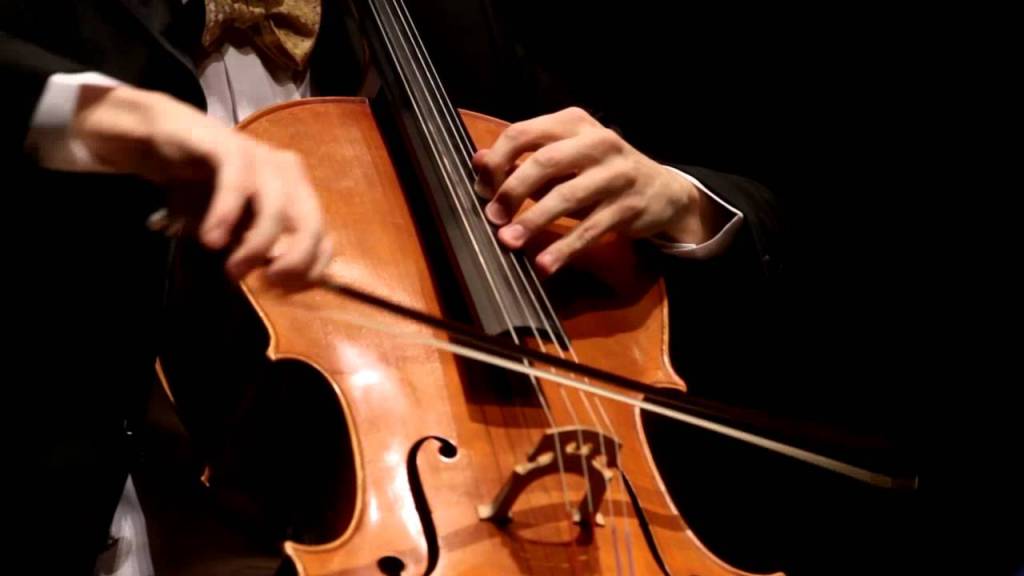
The Anecdote: During the second semester of my graduate studies in romance languages I learned that Mstislav Rostropovich (1927 –2007), the internationally acclaimed Russian cellist and conductor, would be giving a free master class in cello performance in Sanders Theatre on campus. I went early enough to get a seat and enjoyed a once-in-a-lifetime event. When I entered the theater, the stage was empty except for a chair, a grand piano and bench, and a stand with microphone. Soon it was announced that two young cellists, both Harvard undergraduates, would be playing for Rostropovich, who would teach them by critiquing their performance.  

The first young man, reserved and dignified, walked on stage with his cello. Through an interpreter Rostropovich inquired as to the piece the student would be performing. The great Russian cellist, who was also a superb pianist and had mastered the accompaniment for the entire standard cello repertoire, immediately sat down at the piano. He played from memory the introduction and accompaniment to the piece the student had selected. The young cellist played his notes dexterously and precisely and, as far as I could judge, with impressive technique. As a musician, he struck me as precision personified. We clapped politely when the cellist finished and waited for Rostropovich’s critique.  The maestro complimented the young man on his technical proficiency and then explained that it was not enough simply to play the notes with precision. Great classical music demanded more depth of feeling. It was not sufficient simply to play every note correctly; the performer needed to express the emotion intended by the composer.  Rostropovich then took over the cello and played the same piece but with a depth of feeling that brought the audience to its feet. The notes were identical to those played earlier, but the music now resonated in our souls.

            The second cellist, a Chinese-American, came on stage. His name was Yo-Yo Ma. Already he was a celebrity on and off campus, but nothing of the magnitude of the much older Russian cellist. Like the first student, Yo-Yo told Rostropovich what he would be playing. Once again, the maestro sat at the piano and, without any written music, brilliantly accompanied the cellist. The difference in students was striking. Yo-Yo Ma was clearly a prodigy accustomed to performing on stage. He played to the audience and performed with intensity, verve, and dramatic flair. He put his entire body into his playing, and the audience was responding enthusiastically to his dashing personality when Rostropovich suddenly stopped the young cellist mid-measure.

What was wrong? Why did he stop what appeared to be a brilliant performance? What would the great Rostropovich say about this promising artist?  The Russian noted the obvious: Mr. Ma did not lack in dramatic ability; his performance was nothing if not theatrical. But Rostropovich shocked the audience by stating that Ma had “no center to [his] tone.” In music, “tone” refers to the quality or the character of a sound. Rostropovich explained, as best I can recall, that the tone one ideally should strive for is not one overshadowed by the performer’s facial expressions or body language. The tone’s center is found in the sound vibrating through the strings themselves. He then took Yo-Yo Ma’s place and performed a section of the same piece with much of the physical demeanor and dignity of the first cellist but with a more profound depth of sound than Yo-Yo Ma had initially produced. The strings fairly sang through the exquisite phrasing, the diminuendo and crescendo that the maestro produced. The older Rostropovich was clearly, to employ Dante’s phrase honoring his own classical models, “the master of those who know.”

            The Lesson: Yo-Yo Ma learned a humbling lesson that day and soon gained the center of his tone. The lesson that I learned has greatly influenced the way that I have tried to conduct my career as a professional educator. Although my goal has always been to qualify as a master teacher and not as a professional musician, I realized from witnessing Rostropovich critique two fine cellists that I needed in my life’s work to meld precision of thought and speech with the right “tone” (i.e., feeling and spirit). To become an influential teacher, I embraced the idea that one must constantly engage in a balancing act. It is not enough to know and present facts, however accurate and important; one must also mine those facts for meaning and application to the lives of students. Facts and figures must be presented in a way that fosters dialogue, questions, and further thought. After all, we learn best by asking questions and questioning answers. At the same time, a great teacher must avoid the extreme of focusing solely on the dramatic and theatrical in the presentation of material. The ancient ideal, espoused by Horace, was correct: teaching, like literature, should be both dulce et utile. It should inform and instruct but also please and delight.

            How does one maintain that balancing act between “sweet” (dulce) and “useful” (utile) in teaching a class or running an academic program? First, it requires that the teacher engage in thoughtful planning, pondering such questions as these: What do I want my students to take away from my lesson? How do I inspire them to remember and apply the principles I am trying to teach? What examples shall I use to dramatize my points? Second, master teachers will employ a variety of “high-impact practices” in presenting their material. They might distribute study questions or case studies in advance and encourage the formation of study groups outside of class. They might insist on small group work in class. They might “flip the classroom” and have students come prepared to present certain aspects of the material. Third, teachers must evaluate what students are learning and be prepared to modify their approach to teaching when they do not achieve the results they desire. In other words, master teachers (or performers or administrators) must be model learners themselves.

            One day two fine young musicians performed for a world-renowned cellist. Both students had been chosen with care, and they represented their alma mater with honor. Each, however, needed to learn a lesson custom-made for him. One needed to add a crescendo of emotion and feeling to his somewhat cold precision. The other required a reminder that certain aspects of personality might require a diminuendo with a simultaneous crescendo (or focus) on the quality of tone. It is only through such balancing acts that the beauty of the music will vibrate in the souls of the listeners, ennobling and changing them. So it is with teaching that changes lives: proper preparation is key, and balance is all.  

BLOG #18: ON THE IMPORTANCE OF “GOOD MORAL CHARACTER” (January 10, 2021, Sabbath Evening Reflections)

“Moral authority comes from following universal and timeless principles, like honesty, integrity, treating people with respect.” – Stephen Covey

            Decades ago when I became the guardian of an elderly relative who had accumulated  over a long lifetime a considerable amount of real estate and a large portfolio of stocks, I was surprised, if not shocked, to discover that most of her business dealings had been conducted solely on the basis of either a handshake with her farm manager or a telephone call to her broker. At first I questioned the safety, not to mention the validity, of transactions that involved large sums of money on the basis only of spoken (i.e., unwritten) words. Although my relative was feeble and no longer able to manage financial affairs to her satisfaction, she explained, as best she could, that she had tried her whole life to associate, work with, and hire people distinguished by the trait of “good moral character.”  

Yes, before engaging in long-term business relationships my relative did her homework, talking with references or relying on the recommendations of trustworthy friends before choosing with whom to transact business. Yes, she had been “burned” a few times early on, but over the years she had become astute in ascertaining whether someone was saying what they meant and meaning what they said. Yes, of course she could afford a high-priced attorney to draw up complicated legal contracts but generally chose not to do so. In fact, when I contacted her trusted Harvard-trained attorney of many years, he was more than willing to prepare any document I wished. I also discovered that he charged me $600/hour just for chatting with him and that he calculated charges based on 15-minute increments. If I spoke to him for 16 minutes, I was charged for a full 30 minutes ($300).

In the intervening years, as our family businesses have expanded, I have thought long and hard about the importance of good moral character in creating or fostering trust in business and, more recently, in politics. In business, even though jointly held assets (I was recently amazed to discover) now place my family in the top 1% of all the people in the United States (it takes less than one might suppose), I have found the same satisfaction that my relative found in knowing that if I ask my broker to purchase 100 shares or 1000 shares of a certain stock, he will execute my request faithfully and precisely. He trusts me, based on years of experience, that I have the funds to complete the purchase, and I trust him to do exactly as I have requested. Likewise if I tell one of my farm managers that I will give him 3/4 of a crop if he doesn’t charge me for fertilizer but only 2/3 of a crop if he expects me to pay for fertilizer, he knows that I mean what I say and I trust that he will divide the crop accordingly.

Let me be clear: I am not arguing against the value of putting things in writing or involving lawyers, especially when business deals are complicated or the parties don’t have a long-term relationship. In most cases where large sums of money are involved, it is clearly best practice in most cases that things be spelled out in writing. Rest assured that I avail myself of attorneys for many transactions. But I also have forged relationships over time that allow me to call the president of a bank, request a loan to purchase a tract of real estate, and have the money transferred in a matter of days. When he gets around to sending me a promissary note, the banker knows that I will sign it. (N.B. He is the bank’s president, and he and his family own the bank.) What I am longing for, however idealistically, is a society that consistently looks for, recognizes, extols, prizes, embraces, and rewards good moral character in business and politcs. Honesty and trustworthiness should form the bedrock of our society, not the exception, and we should not be ashamed to state that publicly and repeatedly and then follow through and act accordingly.

A friend asks, “What does the attribute of ‘good moral character’ mean in relation to politics?” Interestingly, that phrase is identical to the one used by the United States Citizen and Immigration Services to determine who qualifies to become an American citizen.  Immigration law primarily defines good moral character in terms of absence – what a person has not done. Listed among the things that would disqualify an immigrant for citizenship are these acts: murder, an aggravated felony, or a Federal crime, which includes money laundering, crimes against the government, offenses that jeopardized national security, offenses that involved fraud or deceit in which ithe victims’ aggregate losses exceeded $10,000, tax evasion involving a loss greater than $10,000 to the government, perjury, subornation of perjury, witness tampering, and giving false testimony under oath or providing false information in documents. Should it be proven that an applicant for U.S. citizenship engaged in or was convicted of any of these offenses, they consitute grounds for denying citizenship. Is it too much to expect that federally elected officials be held to the same standard as an immigrant applying for citizenship?

For me, good moral character in public life, as in private conduct, is much more than the absence of criminal acts. It is the presence of qualities such as honesty and truthfulness that are balanced with ethical behavior and consistent choices to do what is morally right. I am not so naïve as to think that the “moral choice” cannot at times be challenging to discern or make. For example, I believe that as a general rule (say in 99.9% of cases) we should not lie. But I also believe that in rare circumstances there can be a moral justification, even a moral imperative, for not telling the truth. If I were a German citizen in World War II and my Jewish neighbor knocked on my door and asked me to hide his child from Nazi stormtroopers and I was able to do so, I would not reveal to the Nazis that I was hiding a Jewish child in my closet. The far greater good of saving a child’s life would trump (forgive my use of that word) telling the truth – which is that I was intentionally breaking an unjust and immoral law that condemned Jews to work camps and almost certain death.

I am hardly the first to speak out for good moral character, but I feel that in recent years this attribute has fallen victim or prey to the cult of personality. We emulate or exalt actors or performers, sports stars or politicians because we are enamored of their charisma or talent, well-crafted words or sex appeal but choose to ignore their vulgarities, rudeness, or lack of moral character. With our actions and money, if not our words, we are saying, “He may be a dope addict and a pedophile, but boy can he dance.” “He may be guilty of sexual assault, but he throws or shoots that ball incredibly well.” We vote for politicians because of their purported policies and cast a blind eye on their lies, hypocritical acts, and callous mistreatment of others. With our votes, if not our words, we are saying, “He may be an egotistical narcissist, an adulterer, a pathological liar, a tax evader, a racist and a white supremacist, but he will appoint judges who think like me.” Heaven help us! As Ana Navarro has argued, “There is a minimum requirement of morality, of moral compass, of decency, of moral empathy. And if you are incapable of meeting that minimum requirement, you can’t even talk to me about policy.”

What would happen if we were to place good moral character above all other attributes, including fanatical loyalty to a sports team or political party, policy, or ideology, when we do business, fund activities, or vote?  I believe it would lead to a healthier and more robust society. But is good moral character even possible to achieve on a large scale? In religious terms, can Zion exist today? My answer is that good moral character and moral choices are made one at a time by individuals acting alone and in concert with like-minded individuals. To that end, I close by sharing a handful of favorite quotes on how to bring good moral character back into our daily transactions and election choices:

How to do it: “Moral excellence comes about as a result of habit. We become just by doing just acts, temperate by doing temperate acts, brave by doing brave acts.” – Aristotle. In other words we start with ourselves, making sure that our choices are moral.

Why do it: “He who is void of virtuous attachments in private life is, or very soon will be, void of all regard for his country. There is seldom an instance of a man guilty of betraying his country, who had not before lost the feeling of moral obligations in his private connections” – Samuel Adams. Practicing altruism, as opposed to egotism, leads towards higher ground.

“There is no man more dangerous, in a position of power, than he who refuses to accept as a working truth the idea that all a man does should make for rightness and soundess, that even the fixing of a tariff rate must be moral.” – Ida Tarbell. Good moral character refers to small acts and minor decisions as well as the large ones.

The difference between pretending or saying and actually doing: “Hypocrisy is not a way of getting back to the moral high ground. Pretending you’re moral, saying you’re moral is not the same as acting morally.” – Alan Dershowitz. We have to do more that “talk the talk”; we have to “walk the walk” in order for good moral character to flourish.

BLOG #17 (July 19, 2020, Sabbath Reflection): ON LISTENING TO “SOFTLY AND TENDERLY JESUS IS CALLING”

This morning, as part of our “home centered, church supported” worship, we listened to the Tabernacle Choir at Temple Square sing a touching rendition of the hymn “Softly and Tenderly Jesus Is Calling.” The refrain “ Come Home! Come Home!” always touches my soul. The words take me back thirty-six years to a scene at my brother-in-law’s grave side. It was a beautiful spring day in early June 1984 when a dear friend sang that hymn a cappella as we stood mourning the loss of our beloved Kent. Born with a chronic blood disease, he had overcome a host of challenges in his quarter-century of life. Only weeks before, life seemed to hold special promises for him. He had married the girl of his dreams months earlier and was studying pre-med to become a doctor. He wanted to help others as he himself had been helped in countless emergency room visits and hospital stays. AIDS was raging across the country and around the world, and he was so grateful that none of his weekly blood transfusions had been infected with the virus.

Yes, things seemed to be looking up. Then one afternoon his newlywed wife came home and found him passed out. The EMT crew and doctors at the hospital worked hard to revive him, but he had departed for his heavenly home without even saying good-bye. Not yet twenty-five, he was gone, leaving behind a young widow, grieving family members, and a veritable army of friends. Hundreds attended the funeral in the college town where he died, and a thousand were present for the memorial service in his hometown. One high school friend, whom he had befriended years earlier on the school bus for handicapped students, composed a special song, “See You at the Reunion.” Kent’s tombstone reads simply “A FRIEND TO ALL,” and what a friend he was. On the school bus, in hospital corridors, on a mission cut short when he was severely beaten by thugs, in the classroom, in his apartment complex, in church, in nature—he was always “a friend to all.” He cultivated what I call “a listening ear,” and he loved to give and receive hugs. Although often confined to a wheelchair because of bleeding and swelling in his joints, he loved to dress up and attend dances.

Kent had responded to the call:

“Softly and tenderly Jesus is calling — Calling for you and for me;

Patiently Jesus is waiting and watching — Watching for you and for me!

Come home! come home! Ye who are weary, come home!

Earnestly, tenderly, Jesus is calling, Calling, O sinner, come home!”

Now I had a choice: continue to withdraw and mourn his departure or find a way outside of my comfort zone to try and make a difference in the lives of others. Although I considered myself reasonably out-going, I paled in comparison to my late brother-in-law’s extroverted personality. He consciously went about introducing himself and asking strangers their name. He loved to hear their stories and was not embarrassed to explain why he was on crutches or in a wheelchair. He specialized in making people feel comfortable around him. I asked myself, “What is Jesus pleading for me to do right now, while I’m still alive and able-bodied?”

“Why should we tarry when Jesus is pleading — Pleading for you and for me?

Why should we linger and heed not His mercies — Mercies for you and for me?

Time is now fleeting, the moments are passing — Passing from you and from me;

Shadows are gathering, death-beds are coming — Coming for you and for me!”

After prayerful consideration, I made up my mind that I would find a way to do what seemed impossible for someone making about $20,000/year:  fully endow a scholarship for handicapped students in his memory. Several people had made small donations when they learned of his passing. I would add to those as I was able. And so, as my professor’s salary grew, I increased my monthly donations. In the early years, the monthly amounts were embarrassingly modest. Unfortunately, the bar for how much was needed to endow a scholarship at Kent’s university kept rising as the years passsed, and I often felt as though I would never reach the ever-changing magic amount to secure the endowment. It took, in fact, over ten years of monthly paycheck deductions. But once the scholarship was endowed and monies began to be disbursed to students in need, I realized that the results were worth the wait as I read letters from grateful recipients.

Although I am hesitant to share excerpts of student letters, I do so not out of any self-aggrandizing wish but out of a desire to express gratitude for my brother-in-law’s example that inspired me to give what I could. From this experience I have learned that small acts of goodness that accumulate over time can lead to major blessings for others.

From a scholarship recipient named Josh: “Life hasn’t been all roses. . . . I was hit with severe depression and anxiety that made [life] extremely difficult. . . . I continue to work through those issues today, but have made leaps and bounds in the right direction. I have been able to keep a 3.97 GPA at college despite these challenges and I consider myself extremely blessed because of it. I give thinks to God regularly for His obvious hand in all aspect of my life. . . . I know the Lord is in control and I know I am doing my part so I am not stressed. . . . I am so grateful for your support of my dreams as I put all my heart into my university studies. I am touched by your generosity and hope to be able to pay it forward in some way, perhaps many ways. Education is not available to everyone. I recognize this and am filled with gratitude for those who help me get mine. I feel extremely blessed. Thank you so much for all that you do. I promise I shall not squander the help you have given.”

From Rosa: “Coming from a single-parent home where my mom had to work as ‘father’ and the little parenting I got I received from in-and-out-again sisters, I value mothering higher than almost anything else. Through my own children, adoption, or students [she plans to become a teacher], I hope I can pass a legacy of divine mothering to others in need. I am incredibly grateful for this gift. As a third generational student with no graduates, I hope to finally complete my legacy by being the first graduate in my family. My parents and grandparents met and fell in love here, yet struggled with grades and extracurricular [activities] until they flunked or dropped out. I, with this academic scholarship, stand on their shoulders as I struggle to finish my degree. Thank you so much. Thank you so very much for helping my dream come true. I consider myself lucky just to go here, but this scholarship allows me to stay and convinces me I belong.”

I am grateful for my brother-in-law’s legacy of being “a friend to all.”  Even though I am now in self-isolation due to the COVID pandemic, I am trying to find ways to reach out and bless the lives of others.  It’s what Kent did, even when he was confined to a hospital bed. In times like these, there are words that I find even more motivational than the words of grateful scholarship recipients. I refer to the words of the hymn “Softly and Tenderly” that tell of the love and promise that the Lord offers if we turn to him:

“Oh, for the wonderful love He has promised —  Promised for you and for me!

Though we have sinned, He has mercy and pardon — Pardon for you and for me!”

On this Sabbath Day my prayer is that “He has mercy and pardon” not just for my sins of commission but also for my sins of omission—the times when I could have done good for someone but let the opportunity pass me by. With this blog post I am resolving to do what I can, for however long this self-isolation lasts and before I, too, am “called home,” to find lives to bless and then to bless them. If you have ideas for how to bless lives while maintaining “social distancing,” please feel free to share them.

BLOG #16 (April 27, 2020): ON “LIGHTING THE FIRE” IN LESS-PREPARED STUDENTS

This blog begins the tale of lessons learned and satisfaction gained over the past decade from teaching, mentoring, and supervising less-prepared college students, meaning those who entered college having received on standardized college admission tests anywhere from the 30th percentile (an ACT score of 16 or 17) to the 45th percentile (an ACT score of 19 or 20).

First, what do I need to confess right off the bat?

Well, to be honest, for the first thirty years of my teaching career I took great delight in teaching (almost exclusively) the so-called “cream of the crop.” Beginning when I was a graduate assistant teaching Harvard undergrads, I taught students who came from the nation’s top prep schools, who were roommates with the likes of Caroline Kennedy, and whose parents and grandparents were barons of industry and finance, and (in at least one case) the president of a South American country.  I continued (as a professor) with Brigham Young University honors students who scored mainly in the 95th to 99th percentile on standardized tests or with undergraduates who on the whole were mature, disciplined, and fluent in at least two languages.[1] Ten years ago I resigned from the easy life of teaching consistently well-prepared and privileged students and accepted the invitation to become provost (the chief academic officer) at the first of two small liberal arts colleges that often accepted students who scored as low as the 30th percentile on standardized college admission tests scores.[2] The bottom line of this blog, for those who prefer to skip the stories, is this: while my satisfaction in teaching honors and honors-level students and helping them continue to perform at the top percentiles was great, it has paled in comparison to seeing a student move from the low-to-mid-range percentiles up forty or more percentile points after four years of small-classroom interaction and one-on-one, face-to-face mentoring.

Second, what is my own background and why do I now emphasize the value of laser-focused hard work over admission test scores? In my formative years I did not come from what anyone would consider a privileged educational background. My early education, however, frankly began earlier than most due to the financially challenging situation in which my family found itself.

When my mother started teaching fifth-grade, it was in the late 1950s and she was in her mid-forties. She had been trained as a dental hygienist but had given up that career when she married my father, a farmer, and moved from Tennessee to Arkansas.  She began teaching to supplement Dad’s up-and-down farm income. The teaching took place at a split-term country school in a rural area of Clay County, Arkansas. A gravel road led to the single-level yellow-brick elementary school, which was surrounded for miles on every side by farm land. Children took classes during the summer time while the crops were growing and then experienced a six-week recess during the fall to help with the harvest, which consisted largely of picking cotton by hand for ten hours a day. Because I was to attend a city school that was on a regular September-to-May schedule, my mother convinced the country school’s principal to allow me to sit in on her fifth-grade class one summer, even though I was only six years old and had not yet started first grade. One benefit was that I got an early start on my education, learning the names of states and their capitals, memorizing lyrics to songs and mastering simple multiplication tables. Mother made learning fun. She put seeds in pots and set them in the window; students watered the pots to see how the seeds sprouted and burgeoned. Popsicle sticks were saved and used to build miniature forts and houses. Games were played to help kids remember facts and timetables. Elocution lessons were taught so that we learned how to stand in front of the classroom and make presentations. The bottom line to this part of my story is that I had a fortuitous head start before I began first grade, something denied at the time to the vast majority of the nation’s first-graders.

What is equally important to know is that throughout my schooling, Mother never bragged on me. She felt that would be prideful and akin to bragging on herself.  I had to learn from another student, whose mother had told him, that I had achieved the third-highest score in the state on a standardized test when I was in elementary school. Mother was of course aware of how I had done, but she still chose not to tell me or praise me. She just told everyone, “My son works hard; that’s the only reason he does better.”  When my report cards showed straight A’s or my test scores placed me in the 99th percentile of test takers, Mother wisely refused to compliment me on being smarter than anyone else; she would always say that I must have studied harder. The result was that I was blessed to reach young adulthood with what is now recognized as a “growth mindset,” the belief that one’s abilities are not fixed at birth but can be developed over time through consistent and persistent hard work and diligent and focused effort. As I have written before, your IQ does not determine who you will become; your innate talent does not determine what you will accomplish. Whatever your natural ability or talent, it is the effort that you put into following your passion that leads to success. In other words, “effort is what ignites [one’s] ability and turns it into accomplishment.”[3] As one of my teachers used to say, “I can’t grade potential, only performance.” What counted was not whether I had potential or not; it was how I performed that mattered.

That emphasis on working hard and performing led me to achieve many things: graduating with a straight-A grade point average and sharing the number one ranking in my graduating class of 400 students in Memphis, matriculating in a university honors program that accepted fewer than 4% of students and graduating summa cum laude and with highest honors, obtaining my master’s and doctorate from Harvard in less than four years, writing or co-authoring eight books and approximately 150 refereed articles, encyclopedia entries, essays, and book reviews.

Third, what happened when I (who had a lifetime of being well prepared and working almost exclusively with other well-prepared students) started working with less-prepared and often woefully under-prepared students?

Initially I was surprised, if not shocked, at how unprepared some students were for college. They claimed to have gotten through high school without reading a single book all the way through. They did not know how to set SMART goals, take good notes, read for meaning, manage their time, prepare for tests, write grammatically correct sentences, balance curricular and extra-curricular activities, or manage their finances. They didn’t understand why they needed to eat healthily every day and get a good night’s sleep every night. Some of these deficiencies my office addressed with “High Impact Practices,” such as “early start” or transitional “bridge” programs; others were dealt with in mandatory developmental or remedial courses. We added SI (supplemental instruction), required and monitored study halls for athletes, made sure we had after-hours tutoring sessions, improved our writing labs, arranged for a course or lessons in how to use library resources, and initiated early warning systems to monitor attendance and guard against absenteeism. We encouraged teachers to involve their students in small group work and to organize study groups for every class. Students were required to meet one-on-one with each of their professors early in the semester and to meet monthly with their faculty advisors. The most challenging part for most students was making each course relevant to their lives.

How does a teacher accomplish that?  How did I assist on a personal level?  For one thing I taught a first-year seminar or first-year experience course at the two liberal arts institutions I served as provost, and I worked hard to get to know as many students as possible by their first name. Then I set about motivating individual students as occasion and time would allow. A true story follows with an invented name for the student.

One evening after dinner on campus I walked over to see how the study halls were doing.  As I walked into the football study hall, I immediately spied Charley slunk down at a desk much too small for his massive frame. He was staring blankly ahead, and one of his muscled legs was extended far into the aisle. On his desk lay a copy of Homer’s Iliad open but face-down. He smiled sleepily when our eyes met and made a half-hearted effort to sit up and pick up Homer.

“Charley,” I said quietly, “why don’t you pick up your book, get a piece of paper, and follow me to the classroom next door?”

“Right now, Mr. Provost?” He drawled, “Am I in some sorta trouble?”

“No, Charley, you’re not in trouble. I just thought we could do some reading together.”

Once we were alone and seated in the adjacent classroom, I asked him to draw a vertical line down the middle of the piece of paper that he had brought and create two columns.  He lazily complied and then looked at me quizzically.

“Are you goin’ give me a test, Mr. Provost? I hope not, cause I hadn’t read but one page of this here book, and I don’t understand nuttin’!”

I started with a narrative that I thought he could relate to. “Charley, the Iliad is the story of two teams locked in a fierce competition. The teams have names, and I want you to label one column or team “Greeks” and the other column “Trojans.”

He started snickering, and I asked him, “What’s so funny?”

“Mr. Provost, isn’t it kinda funny that the second team has the same name as rubbers – you know, male protection? Is they the stronger team or somethin’?”

I smiled patiently and continued to explain that our task, first of all, was to figure out who was on which team and to record the names of the players in the correct column.  I then invited him to read aloud, and he looked somewhat sheepishly around the classroom to make sure the door was closed and that no one was lurking in a corner.

Charley began to read, slowly and deliberately:  “Sing, O goddess, the anger of Achilles son of Peleus, that brought countless ills upon the Achaeans.”

I stopped him and asked, “Which team is Achilles on?”  As Charley had no clue, I introduced him to the glossary in the back of the book and asked him to look up “Achilles” and also “Achaeans.”

“Hmmm, it seems that Achilles is on the Greek team, Mr. Provost! And guess what: the Greeks are also called Achaeans! But what’s Achilles doin’ hurtin’ his own team?”

“Well, Charley, that’s a great question you ask. Why don’t you keep on reading and see if you can find the answer to your question?”  This he did, and soon we had a list of Greeks and a list of Trojans, and Charley started asking more questions.

“What the heck are these Greeks fightin’ over and among themselves of all things?”

“What do you think, Charley?”

“Seems to me like them’s fightin’ over a girl!”

“And you would be right!”

“Mr. Provost, I done seen that many times.  Two players likin’ the same girl, and the first thing you know, all H-E-double toothpicks breaks out.”

By now Charley was getting into the reading.  I offered to spell him off, but he politely declined and kept reading out loud until about half-way through the first book when he stopped and smiled more broadly than I had seen all night.  With a huge grin on his face he slapped the table and exclaimed, “BRAD  PITT!”

As I looked at him with bewilderment, he almost shouted, “BRAD  PITT!”

“Charley, what does the actor Brad Pitt have to do with anything?”

Now Charley became animated because he was going to teach me. “Mr. Provost, this is the story of the movie TROY, starring Brad Pitt!  Brad Pitt is Achilles, and I think I know what’s goin’ happen next. He’s got some real smooth moves in the movie.  You oughtta watch it!”

At that point I knew that Charley was hooked on Homer.  I soon accompanied him back to the study hall, not much more than a half-hour after we had left it.  He immediately plopped down at his desk and kept reading avidly, although now to himself.  As I exited the room, I couldn’t help but smile at all the puzzled football players who were wondering what in the world had happened to Charley.

The pay day, however, came a few days later when Charley excitedly ran over and stopped me as I was walking across campus.  He had signed up to give a presentation on one of the later books of the Iliad and wanted to invite me to come hear what he had to say. I couldn’t help but reflect on a saying that’s often ascribed, rightly or not to William Butler Yeats: “Education is not the filling of a pail, but the lighting of a fire.” For those of us who teach, making the “3 Rs” (“readin’, ’ritin’, and ’rithmetic”) or science or history or foreign language relevant to under-prepared students often means having to meet them on their level.  I have repeatedly found that, once the teacher starts making connections that a student can relate to, before long the student will begin making his or her own connections. When the student becomes the teacher, that’s when teaching can be judged a success. 

[1] The median ACT score for entering BYU first-year students in 2019 was close to 28, which places students in the top 88th percentile nationally out of two million test takers.

[2] The best-prepared students at the two liberal arts institutions where I led the academic programs were comparable to the best almost anywhere in the nation, scoring above the 90th percentile.  I remember one student who as a sixteen-year-old had been accepted to Harvard but had chosen to attend the small liberal arts college because of proffered individualized attention. The average students at the two institutions were average, scoring anywhere from the 45th to the 55th percentiles. Today’s blog, however, relates to those who entered college with admission scores anywhere from the 30th percentile (an ACT score of 16 or 17) to the 45th percentile (an ACT score of 19 or 20).

[3] See Carol S. Dweck, Mindset: The New Psychology of Success (New York: Ballantine Books, 2016), p. 41.

person holding match stick with fire in front of candle with fire
Photo by Pixabay on Pexels.com

Blog at WordPress.com.

Up ↑