Search

The Many Worlds of Madison Sowell

Tag

Personal Blogs

BLOG #23: THE SKUNK (One of 70 Life Vignettes)

            When our daughter MariLouise was about ten years old, her Aunt Mari Lou decreed that her namesake should have a dog of her own: “Every child needs a dog!” At that point MariLouise didn’t have a little sister to dote on, and it was argued that having a dog would provide welcome companionship. Having to care for an animal—seeing that it was fed daily, taken for walks, and properly groomed—would teach the child responsibility. Seeing that I was outnumbered three-to-one (Aunt Mari Lou, my wife, and my daughter against me) and that Aunt Mari Lou had offered to pay for the animal, I engaged in a delay tactic by suggesting that we take the time to research thoroughly various breeds of small dogs. Given the cold Utah winters, I accepted as a fact that we were looking for an indoor dog. The thought of having a house dog that shed hair proved unpleasant enough that everyone agreed that it was best to conduct a search for a dog that did not shed. We checked books out of the Provo Public Library and reviewed various possibilities, from the bichon frisé to the Maltese to the Yorkshire terrier. I had grown up around poodles and suggested that breed as a possibility, even though the cost of grooming could be expensive. MariLouise, who was to be the primary caregiver of the dog, finally settled on a miniature schnauzer. Norma Rohde, our friend and neighbor, owned one, and we all enjoyed interacting with her pooch when we visited Norma. We were referred to a seller in a neighboring town, where we found a litter of silver-gray puppies that were cute as buttons. MariLouise chose a small female, and we named her Mitzi.

            It didn’t take long for Mitzi to become a beloved member of our family. Although MariLouise was the dog’s designated caregiver, each of us soon delighted in taking Mitzi on walks, making sure she had food and water, playing with her, rewarding her with treats, and brushing and petting her. She struggled mightily to learn obedience, and we were obliged to take her to a dog obedience school. That experience ended with somewhat mixed results: we humans learned the commands to sit, stay, come, jump, shake, and roll over; however, Mitzi was easily distracted and often had trouble realizing that the commands were intended for her.

            At night Mitzi slept on MariLouise’s bed. But when MariLouise arose early to go to school, the dog would leap onto my bed and in the winter months scoot under the covers and snuggle next to me. She would also seek me late at night if she wanted to be let out. And so it happened one night when Mitzi was about six years old that she came to me enthusiastically wagging her short tail and begging to go outside. Everyone else was fast asleep, so I let her out the back door, presumably to do her business. I watched her shoot off the porch and down the stairs into the pitch-black darkness. She seemed over-anxious, and I wondered if she sensed a deer or a covey of quail. I waited and waited inside the house for her to return so that I could let her back in. I opened the door periodically and called out her name, but to no avail. Where had that little dog gone? Just as I was about to retrieve my robe and a flashlight and go looking for her, she pawed at the door and barked. As I opened it to reprimand her for taking so long, the unmistakable stench of skunk spray offended my nostrils. Mitzi had chased a skunk and been sprayed. Although the dog seemed quite pleased with herself, the smell was nauseating. I knew that I couldn’t let her run through the house and jump onto MariLouise’s bed.

            What was I to do? It was nearly midnight. I remembered (the old wives’ tale) that tomato juice was the best remedy for treating skunk spray. We didn’t have any tomato juice, but we had what I considered the next best thing: thick, red tomato ketchup. I grabbed Mitzi with my left hand and held her firmly under my arm while I grabbed a large bottle of Heinz ketchup with my free hand. I quietly slipped into our master bathroom and placed the dog in our bathtub, where first I washed her with shampoo and warm water. (In case you don’t know, skunk spray, as I quickly discovered, only gets worse when it is wet.) Not only did the shampooing not lessen the pungent smell of skunk, Mitzi now started to shake the water off her thick coat. My pajamas were getting wet, and I knew that the treatment with ketchup would result in their getting stained. I did the only thing I could think of: I stripped naked and got into the tub with the dog and the bottle of ketchup. Leaning over the animal, I applied ketchup liberally and, while massaging the blood-red liquid into her coat, tried my best to hold the increasingly slippery dog down so that she didn’t jump out of the tub and shake the ketchup on the carpet and walls.

As I muttered one-word commands to “sit” and “stay” to little avail, the sound of my muttering and the dog’s occasional yelps awakened my wife. Half asleep, she rolled out of bed and plodded towards the source of the noise: our bathroom. Opening the door without knocking, she gasped at what she witnessed or thought she was witnessing: a naked man splattered with blood slaughtering the beloved family pet in the bathtub. Now fully awake, she yelled, “What’s going on?” I looked up, met her wide eyes, and responded, “It’s ketchup, not blood! Mitzi got sprayed by a skunk!” My wife rolled her eyes, shook her head at my predicament, and retreated to bed. Meanwhile I was left with a still-stinking dog, a mess to clean up, and the thought that whoever said “every child needs a dog” didn’t know what skunk spray smelled like.

            Carol Burnett reportedly said, “comedy is tragedy plus time”—meaning that, given time for pain or discomfort to subside, dreadful experiences can often lead to humorous recollections. In the case of Mitzi and the skunk, I know that is true. Furthermore, in one of life’s great ironies, when Mitzi succumbed to canine cancer a couple of years after the ordeal by ketchup, we all cried—no one more than I—over the loss of a loyal and beloved member of the family.  

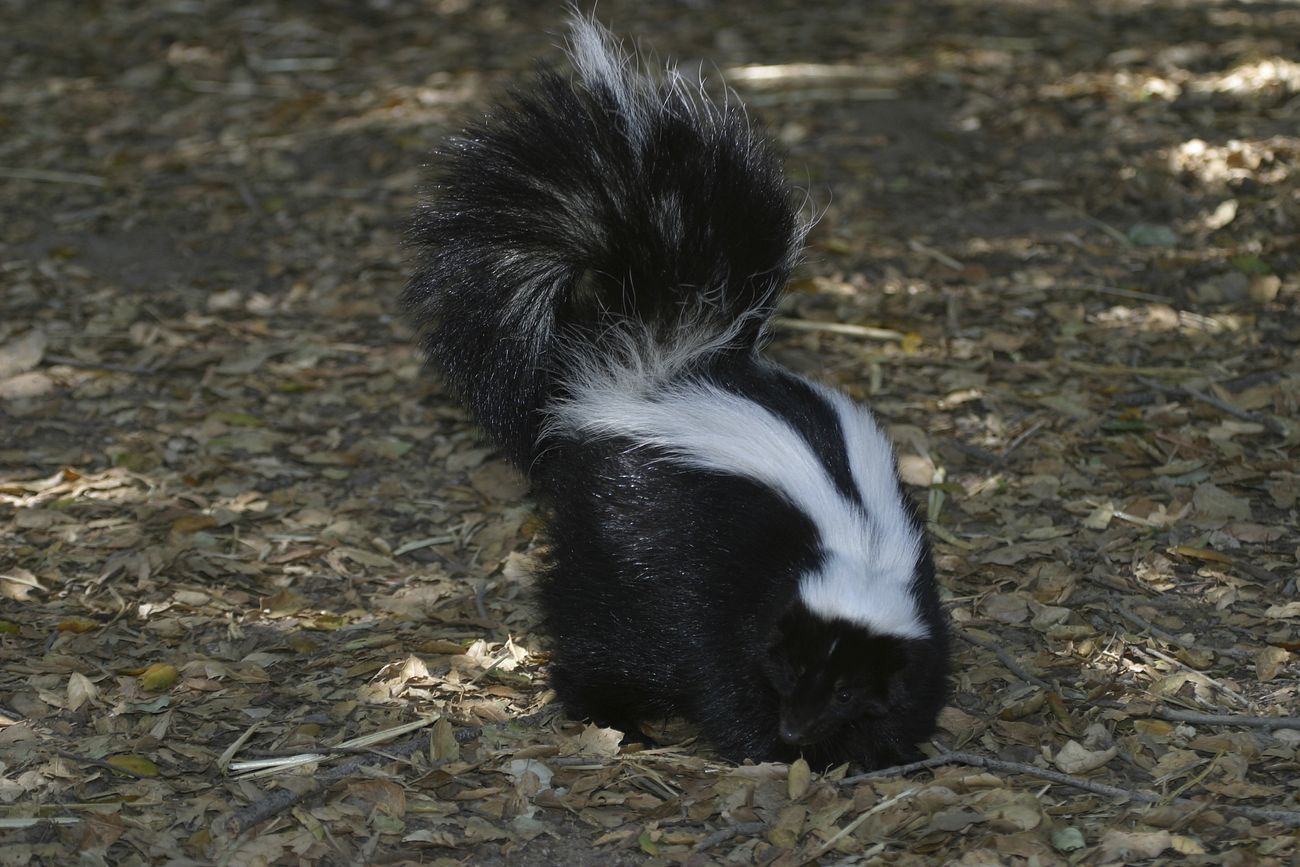
Skunk. Original public domain image by National Park Service is licensed under CC-CC0 1.0
Featured post

BLOG #22: THE RATTLESNAKE (September 7, 2023)

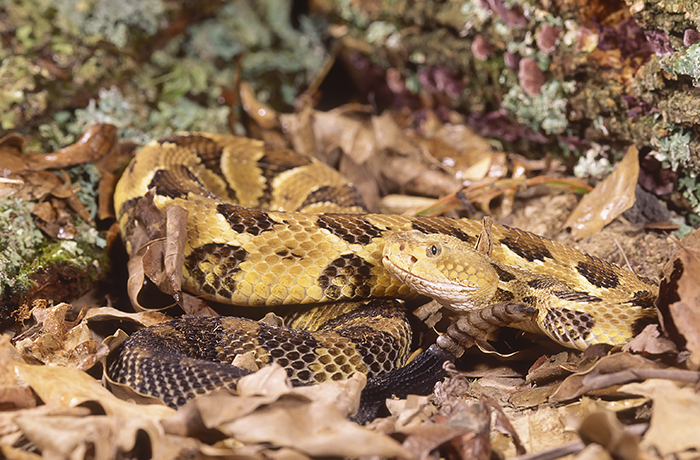
Arkansas Timber Rattlesnake

            When I was born in the early 1950s, we lived in a rectangular wooden house that was a converted honkytonk with badly scuffed hardwood floors. Surrounded by two or three acres of pasture, the former dance hall sat in a small grove of tall oak trees that I loved to climb. Located in a rural setting just over two miles outside of Piggott, Arkansas, our property was bordered by ditches that filled quickly with water when it rained. The water attracted snapping turtles and snakes of various types, some harmless and some venomous, such as the water moccasin. Since I was too young to recognize the difference between poisonous and non-poisonous snakes, my father, who had waited 65 years to generate a son to carry on his name, made the decision to scare the daylights out of me when it came to all snakes. He told me tales about people dying agonizing deaths from close contact with a rattlesnake–even after the snake was dead. In one story a man cut off the head of a rattler just as it struck his boot. The next day the man went to put his boot back on, and a single fang of the snake, which had become embedded in the leather, pierced or scratched his skin; the man died a painful death the day after the snake was killed. If I ever saw a snake when I was playing in the yard or pasture, I was under strict instructions to run for my life and seek refuge inside the house.

            One day when I was four or five years old, Dad came home from our farm in the hills outside Rector, Arkansas, carrying a gallon-size glass jar with a metal lid screwed tightly on. Inside, coiled around ice, was a headless skinned rattlesnake. I was horrified at the sight. Dad handed the jar to my mother and instructed her to put the dead snake in a skillet and fry it. I didn’t comprehend why he wanted her to do that; all I knew was that I didn’t want to have anything to do with that snake, alive or dead. When dinnertime arrived, we sat down at the table together and said grace. Then, to my horror, Mother placed before us a platter with the fried snake on it. Mother stated unequivocally she had no intention of eating that snake, and I loudly chimed in, “I’m not eating it either!” My father, who had a bad temper, shouted, “I killed and cleaned that snake and brought it home, and you will eat it!” He placed a piece on my plate, and I stared at it incredulously and pop-eyed. The only thing I feared more than a rattlesnake was my father, who kept a razor strop in the bathroom closet and occasionally threatened to whip me with it for any act of disobedience. (He never actually struck me with it, but I had no doubt that he could and would use it.)

That fateful night at dinner I paused, swallowed hard, stuck my fork in that feared piece of snake meat, and reluctantly took a bite. After I chewed and swallowed it, everyone looked at me for my reaction. With tears welling up in my eyes, I turned to Mother and asked with a whimper, “When do I die?” She immediately realized that, because of the fear Dad had instilled in me of all snakes, and rattlesnakes in particular, that I was assuming that every part of that serpent was poisonous and that for some unknown reason my father was trying to murder me. Mother was furious with Dad for making me taste that snake. Directing her ire at him she yelled, “Your son thinks you’re trying to kill him!” Mother reassured me that the snake’s meat was not poisonous, and Dad just laughed at the misunderstanding. Nevertheless, he didn’t make me eat any more snake meat that night or ever again. For the record, I have no recollection of what the snake meat tasted like, and my deep-seated fear of snakes remains to this day.

            I’m not sure what the moral of this true story from my childhood is, but I believe that many pre-kindergarten children—not just the Amelia Bedelias and autistic children of the world—often take what adults say as the literal truth or believe in their parents’ “white lies” long after the children finish elementary school. “Storks bring babies.” “Tell a lie and your nose will grow longer!” “Step on a crack and break your mother’s back!” “If you cross your eyes, they’ll stay that way.” “Carrots make you see in the dark.” “If you touch a frog, you’ll get warts.” “Clean your plate or a child will die from starvation in India (or Africa)!” (That one never made sense to me, as I was quite ready to send my spinach or green beans to those starving children.) In my case the warning was “Get close to any snake, and it will kill you!” The best parenting requires mothers and fathers to take the time (which many may feel that they don’t have) to explain things simply, in an age-appropriate way, so that their son or daughter doesn’t grow up with gross misperceptions or overblown fears.

Blog #12: On (Not) Having a Father (Father’s Day, June 16, 2019)

Born in the nineteenth century (September 7, 1886), my father was in his sixty-sixth year when I was born.  (Yes, you read that correctly; there’s no typo.)  His parents were born prior to the beginning of the Civil War, and he grew up in an antebellum Mississippi mansion in a family of ten children (seven boys and three girls).  By the time World War II ended, his half-dozen brothers had exclusively produced either daughters or sons without male offspring. Therefore, Dad feared that his family name was in danger of extinction unless he produced a male heir.  His own first marriage had resulted in one daughter who had no children of her own.  His second marriage, which was to my mother, was essentially a marriage of convenience, somewhat like an arranged marriage, rather than anything resembling a marriage fueled by romantic love.  It came about because his favorite nephew Roger (who had no children) was married to my mother’s favorite cousin Frances.  Roger and Frances concocted the idea that an older and well-to-do farmer, who was lonely and needed a housekeeper, couldn’t do better than to marry an attractive divorcee with two young boys she was struggling to raise on her own.  Likewise a financially challenged divorcee could do much worse than marrying an older man who promised to bequeath her his wealth and, in the meantime, teach her boys (his stepsons and my half-brothers) to work hard.

For all parties this unconventional marriage seemed a “win-win” situation. Then, after a couple of years of marriage, my father decided it would be desirable to have his own son, someone who would carry on the family name; my mother, by then in her fortieth year, thought, “Why not?” And that’s how I came to be the product of two parents who were more than a quarter-century apart in age and to have a paternal half-sister who was old enough to be my grandmother.  (The story of “Aunt” Mari Lou, who was my half-sister, will have to wait for another day and another blog.)

Needless to say, growing up in such a family had advantages and disadvantages. For one thing we lived in the woods in a converted dance hall, and I grew up climbing trees and searching for frogs and crawdads in the ditches (not an especially auspicious beginning for someone who went on to earn two graduate degrees from Harvard).  My much older maternal half-brothers were gone from home by the time I entered second grade; one joined the Navy and the other the Air Force.  Therefore, I was reared essentially as an only child and often felt quite lonely living out in the country, two miles from town.  However, Mother was also one of ten children (seven girls and three boys), so I grew up in relatively close vicinity to several aunts, almost all of whom were widows and many of whom (e.g., Aunt Lee, Aunt Beth, Aunt Rosamond, Aunt Irene, and Aunt Virginia) had no children of their own.  I had paternal first cousins whom I never met because they were the children of Dad’s older siblings, born in the 1870s.  But this blog is not about aunts, uncles, half-siblings, and cousins; it is about (not) having a father and the reflections that leads me to on Father’s Day.

While everyone technically has a father, my own was killed in a car accident when I was only eight years old.  That means that during the remaining ten years I was home (age eight to eighteen) I was bereft of having a father to whom I could turn when I was bullied at school or when I was trying to figure out what puberty was all about or when I developed a crush.  I was reared primarily by my mother in conjunction with an assortment of widowed and childless aunts.  So what does Father’s Day mean to such a child?  Here are three things it means to me:

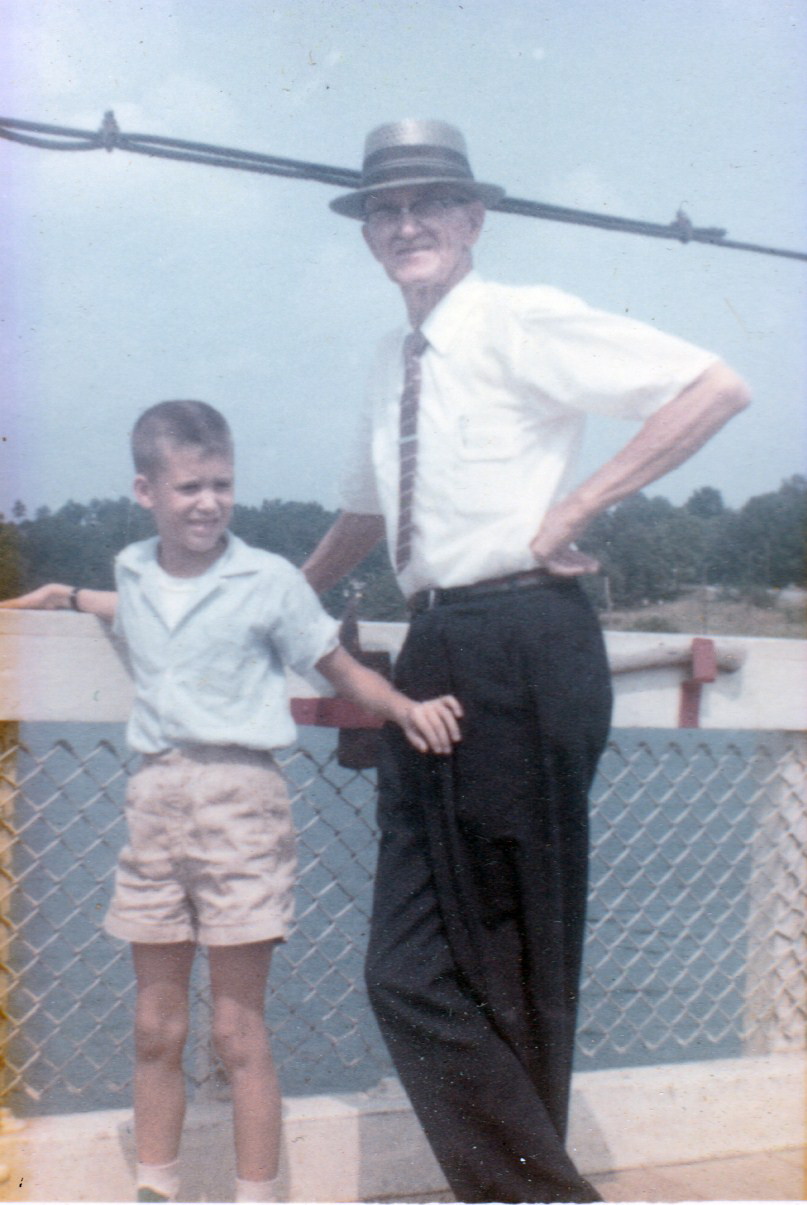
  • On Father’s Day I cherish the memories of the small things Dad did for me. Examples include the following: The one time he took me fishing, and I caught one small fish that Mother fed to the cat.  The one time he taught me to shoot a rifle, and he kept the handmade bull’s eye target and showed it off to his fellow checker players.  The one time he took me hunting, and my half-brother shot a few quail.  The one time he made me ride a horse alone through the woods, even though I was terrified I would get lost, but I followed his directions and made it back safely.  The one time he took me to a swimming lesson, and I learned to love swimming and it was the only physical education course in college that I got a straight A in.  And the one time we went on a family vacation to the Ozark Mountain, and a photo taken on that trip is the last one taken of him alive.  For the record, I do not cherish the one time he forced me to eat rattlesnake meat after he killed and skinned one and had Mother deep fry it.  I was mortally afraid of all snakes; after eating the bite Dad made me take, I asked Mother, “When will I die?”  (I was more afraid of his temper than I was afraid of dying.)
  • On Father’s Day I reflect on and question how my life would have turned out had he lived. Would I have become a pugilist? (He bought me boxing gloves for my sixth birthday, and we watched boxing matches “Live from Madison Square Garden” every Saturday night.)  Would I have become an expert marksman? (My half-brother, under Dad’s tutelage, became a superb shooter and hunter.)  Would I have followed in his footsteps and become a farmer?  (Well, I have acquired a few farms over the intervening decades, so maybe I did follow in his footsteps in that sense.) Would I have remained a Methodist?  (When I was born, my father told my Baptist mother that he would rather see me dead than a Baptist.  He was religiously intolerant.)  Would I have become as intolerant, bigoted, and ill-tempered as he could be?  (He once confiscated and burned the crucifix [read:  “graven image”] of a Catholic relative.)  The answer to most of these question is “I don’t know.”
  • On Father’s Day I am grateful for the handful of men who took the time to think of me when it was time to do “boy things” or to have key growth experiences: For “Red” Shannon who would pick me up when I was in the fifth and sixth grades and drive me to nighttime sporting events that didn’t interest my mother.  For the junior high basketball coach who chose me as one of two seventh-graders to be on the junior high team (until I broke my arm during a practice).  For a minister who encouraged me as a teenager to be active in Methodist Youth Fellowship and who allowed me to play the organ during Sunday services.  For the husband of my mother’s best friend who counseled me to move from my small hometown in rural Arkansas to the big city of Memphis, where I would be exposed to greater academic challenges and more social and cultural opportunities. For a religion professor in college who suggested that I pray sincerely about serving a mission despite my mother’s reluctance to let me go.

My take-away from these reflections is that, to quote a favorite scripture, “out of small things proceedeth that which is great.”  We all need to take more time to do “small things” that are good for our children and grandchildren and for the children and grandchildren of our siblings and friends.  What is small to us may be large to those sons and daughters.  Likewise we need to be aware of those who do not have father figures in the home and ask ourselves how we can help to fill that absence in a way that is affirming and helpful to the remaining single parent and to the child.

In closing, I wish everyone a reflective Father’s Day.  No earthly father is perfect, and I include not only my father but also myself in that statement.  That does not mean that we cannot engage in a multitude of small things and create positive and memorable experiences for our children and surrogate children.  That is what I have attempted to do since I myself became a father almost forty years ago, and that is what I hope to continue doing until I pass a miglior vita.

Blog # 9: THE COUNTESS VON HOHENLOHE: A PARABLE (July 4, 2018)

THE COUNTESS VON HOHENLOHE: A PARABLE

(July 4, 2018)

            As a young assistant professor, I enjoyed a grant one summer to accomplish research in some of the finest libraries and archives in Italy.  Among these institutions were Rome’s Vatican Library, where I examined Petrarch’s original holograph manuscript of the Rime sparse, and Florence’s Biblioteca Medicea Laurenziana (Laurentian Library), where the director gave me a personal tour of Medici treasures in the vaults and arranged for me to meet with the director of the city’s Biblioteca Nazionale Centrale (Italy’s largest library) and its Archivio di Stato.  What proved most memorable about my research trip, however, took place after my Italian sojourn had ended when I was invited to travel to Bern, Switzerland, to meet with the owners of the rare book firm of Volkoff & von Hohenlohe.  The story of my encounter with Countess Adelheid von Hohenlohe follows.  I share it not only as the story of an immigrant who made a successful new life in the United States but also as a parable for our times.  Each element of the following narrative carries a second, metaphorical or allegorical meaning, and I invite my readers to ponder possible meanings for their lives.

After I arrived in Bern and checked into my hotel, I called the telephone number that had been given me for Volkoff & von Hohenlohe.  I was told that the Countess von Hohenlohe’s business and life partner, an immigrant of Russian descent named Ivan Volkoff, would drive to the hotel at the appointed time and wait for me outside.  I inquired, “How will I know who he is?” The answer was simple:  “He will be driving a Cadillac.”  While the presence of expensive cars in Switzerland was not unusual then or now, an American-made Cadillac was practically unheard of.  Sure enough, at the hour agreed upon, a Cadillac pulled up in front of my lodging.  The driver identified himself as Ivan Volkoff, and he was to be my chauffeur.  He explained that the Countess lived on the outskirts of the city in a tall apartment building.  When we arrived, I saw that the edifice was surrounded by a high fence and that entry to the underground parking garage was possible only upon insertion of a special card in a designated slot beside the massive iron gate.  After we gained entry and parked the car, we entered an elevator.  Ivan explained that the Countess lived on the top floor and that access to her penthouse apartment was possible only if one had a special key that allowed the elevator to reach the floor in question.  He then inserted the required key and pressed the button for the penthouse.  The elevator rose quickly, and soon I found myself in the home of a member of the German aristocracy.

Even though I had visited most of the major art museums in Europe and the United States, I was not prepared for what I next experienced.  The parquet floors were covered with magnificent woven carpets.  The first salon, filled with antique furniture, featured a French Empire-styled settee and coffee table covered with Meissen figurines arranged as if they were dancing.  Dutch still-life paintings hung on the walls to either side of an eighteenth-century Dutch inlaid cabinet.  The second salon included an Italian Renaissance chest and complementary furnishings.  The third room I entered was the dining room, with the table set with exquisite china and silver in preparation for our lunch.  It was in that room that I was formally introduced to the Countess, who insisted that I call her Adelheid.

As we sat down to eat, I couldn’t help but notice that the massive silver candelabra in the middle of the table carried the von Hohenlohe coat of arms.  I struggled to know what to say in such a sumptuous and unfamiliar setting.  I felt as though I were eating in a museum and was hesitant to speak for fear of making a faux pas.  Finally I said, “I assume these beautiful furnishings come from the von Hohenlohe family estate.”  The Countess smiled politely, but her reply stunned me and, in many ways, changed the course of my life (leading me to become not only an academic but also a serious collector of antique prints and books).

“No,” she replied, “everything you see, with the exception of the family silver, came from California; I have brought it back to its home, to its original continent.”  I was intrigued, and after lunch the Countess took me on a tour of the penthouse and shared with me her story and the story of her family.

Adelheid grew up in a castle situated on a 20,000-acre estate in southeastern Germany, in the region known as Hohenlohe.  As a child she had enjoyed the services of a personal maid, who chose her clothes and helped to bathe and dress her.  Her father, Prince von Hohenlohe, was a general in World War I in the Kaiser’s army.  When a fragment from an exploding artillery shell struck him in the head, he was blinded.  Adelheid, who was born in 1913, the year before the Great War started, grew up with a father who was blind.  As they visited the castles and estates of her princely relatives, she served as a guide to her father.  Taking his hand, leading him through rooms, and functioning as his eyes, she learned to describe precisely and in great detail the tapestries, furniture, silver, china, and objets d’art she saw.  In return her father would tell her the history of the various works and how to identify and interpret everything from mythological scenes to trade marks on fine porcelain.  What she did for her father, she did out of love and a sense of filial duty.  She never expected to have any need or practical use for the information he provided in return; she believed herself destined to inherit a life of wealth and privilege.

Everything changed with the rise of Nazi Germany and the outbreak of World War II.  After a half-dozen tumultuous years, Germany lost the war and the country was divided into two parts.  The von Hohenlohe castle was situated in the countryside in what became known as East Germany, and their large family town house was located in East Berlin.  Her family had access to neither, and they lost ownership to the Communist regime.  Adelheid’s father was deceased, and she was left only with her widowed mother and the family silver.  With her castle and town home no longer available to her, she immigrated to the United States with the same wave of German immigrants that included the rocket scientist Wernher von Braun (1912-1977). She landed in California with her aged and ill mother and few material possessions other than the aforementioned family silver.

What does a German Countess do when she finds herself in a foreign land with little more than her title and none of the servants and lands to which she was accustomed?  In Adelheid’s case she chose not to despair over incalculable losses.  Rather she drew on the knowledge she had gained while serving as her father’s eyes and listening to his stories.

At this point in the narration of her life story, Adelheid led me back to the first salon I had seen in the penthouse.  She opened the glass doors of the Dutch inlaid cabinet I had previously admired, and she encouraged me to tell her what I saw.  I looked and told her that I spied several attractive cups and saucers of different patterns.  She asked if any in particular set caught my fancy as being unusual.  To my untrained eye, I could only reply, rather lamely, “They all look pretty to me!”  She then picked up one cup and saucer, showed me the mark on the underside, handed the set to me, and related:  “I found this cup and saucer at a garage sale in California and paid $26 for it.  The children or grandchildren who were selling it had no idea of it significance.”  I thought to myself, “Well, $26 is a lot to pay for a cup and saucer that don’t match any of the others.”  However, I said nothing and waited for the teaching moment.  She continued, “The mark indicates that it is of Swiss manufacture and dates from the eighteenth century.”  While I had heard of fine porcelain such as Sevres in France and Meissen in Germany, I had never heard of any that was early Swiss.  Adelheid added, “It is extremely rare and has been appraised at $10,000.”  My hands began to tremble ever so slightly, and I quickly returned the cup and saucer to her.  I wondered, “Why didn’t the original owners pass that knowledge to their children?”

Adelheid then proceeded to tell me the story of several of the pieces in the room:  a set of Meissen figurines had been misidentified as to their date in an auction catalog; she, recognizing what decade they were, had purchased them for a fraction of their worth.  The same was true of a Dutch still life painting that had contained an incorrect or imprecise description by the auctioneer.  In the dining room she showed me a large painting of a landscape.  She pointed to the lower right-hand corner, where I saw a signature and a date from the first half of the nineteenth century.  I did not, however, recognize the artist’s name.  She explained, “I found this painting in a California art gallery.  It was quite dusty and had a small tear in the canvas.  I recognized the artist’s name as an Austrian naturalist painter who is extremely collectible, especially in his native land.  The gallery owner had not done any research because he didn’t think anyone would want the painting because of the dirt  and the tear.  I paid $200 for it and had it cleaned and the repair mended.  The last offer I had for it was $40,000.”  Once again, Adelheid’s knowledge, gleaned at her blind father’s side, had paid a huge dividend. 

At that point my curiosity was piqued by an unusual all-white porcelain sculpture, about eighteen inches tall, of a hunter, a pack of dogs, and a stag.  When I asked about it, she said, “Oh, I misspoke earlier when I said everything came from California.  I found that piece in Utah in an antique store.  I immediately recognized it as an exceptional piece of early nineteenth-century Meissen.  It was undoubtedly packed in straw, placed in a barrel, and brought across the plains by a pioneer family.  It would have been their prized possession.  As it was passed down through the generations, the story of its origin was lost.  A descendant, not realizing that it was a museum piece, sold it for pennies on the dollar to an antique dealer, who likewise did not recognize what it was.”  Adelheid had paid next to nothing for an art object worthy of a museum.

While the Countess surrounded herself with art work and furniture that reminded her of her former life, she made her living by buying and selling old books.  As with the art she collected, she had the ability to recognize important rare books for sale at auctions and in antiquarian bookstores and private collections, purchase them for reasonable sums, and then increase their value through detailed descriptions of what they represented.  In essence, she made a living by drawing on her vast storehouse of knowledge and her ability to do research.  She shared what she learned in relation to the acquired books and manuscripts and offered them to libraries and collectors around the world.  When I met her, she had regained enough affluence that she was able to live on two continents, dividing her time between Europe and the United States.  Eventually she retired to Solvang, California, where she died in 2010 at the age of 97 years.

Everyone with whom I have shared the story of the Countess von Hohenlohe has taken away different messages.  Some have focused on the need to have a guide, such as Ivan Volkoff was for me, to lead or introduce a young person to influential figures or mentors.  Others have commented on the need for credentials, such as the card to open the gates or the key to get to the penthouse floor, in order to reach where we wish to go.  Some who have inherited family heirlooms have expressed their disappointment in not asking their grandparents, now deceased, about the history and value, material or otherwise, of those objects.  Parents have shared with me their renewed desire to explain to their children what is most important to them, so that their knowledge or testimony or experience is not lost or forgotten.  One message I have taken away is the realization that serving another person, such as the blind father, often comes back to bless the giver of service in unexpected ways.

I am interested in what lesson(s) the readers of this blog take away from the story of the Countess von Hohenlohe.  (Perhaps at a future date I’ll tell the story of Ivan Volkoff, whose maternal grandfather was one of the wealthiest Russian landowners prior to the 1918 revolution, and how Ivan made his way to California.)

[Photo, courtesy of Ivan Volkoff, is of Adelheid von Hohenlohe on her 85th birthday in Solvang, CA.]
Blog Post #1 (30 November 2016): On the “Brave New World” of Blogging

OBLIGATORY PREFACE AND DISCLAIMER

Although this website (madisonsowell.com) — which I trust family and Facebook friends will  visit regularly, “Like” and even “Link” to — is entitled “The Many Worlds of Madison Sowell” and although the “about.me” page (about.me/madison.u.sowell) — which I likewise hope readers will “Like” — clarifies what many of those “worlds” are, I start Blog Post #1 with two disclaimers about my entry into the world of blogging.

Disclaimer Numero Uno:  For yours truly, “to blog” is, to quote Aldous Huxley quoting Will Shakespeare’s Tempest, Act 5, scene i, to experience a “brave new world.”  In writing this initial blog, I feel like Dante the Pilgrim lost in a “selva oscura” (Inferno 1.2).  In my case it’s not so much the “dark wood” of error as the impenetrably thick forest of HTML (Hypertext Markup Language), which is used “for tagging text files to achieve font, color, graphic, and hyperlink effects on World Wide Web pages.”  I reject responsibility  for HTML’s complexities and plead for forgiveness if links don’t work properly, fonts appear Gothic when I intended New Times Roman, and colors are less virile than I planned.

Disclaimer Number Two: While novels inevitably begin with the legal disclaimer that “the characters bear no relation to living persons,” this blog heads in the opposite direction.  “Characters appearing in this blog often bear close relation to deceased persons.”  As a result, my disclaimer (a.k.a.my artistic justification) is that I am not responsible for the actions of my dearly departed relatives about whom I shall have much to say in due course.

HEART OF THE MATTER: WHERE MY BLOGS FIT IN THE LARGER SCHEME OF THINGS

As an inveterate researcher I know that blogs come in four basic forms.  Some are published by non-profits, organizations that seek to promote charitable acts; others constitute “how-to-do” this or that and offer tips or counsel; company or business blogs seek to sell something; and, last but not least, are the personal blogs, of which this is one.

The reasons for starting a blog are varied.  Here are ten reasons, with my top three in bold:  to share thoughts and opinions, to market a product, to help others, to establish one’s expertise, to connect with like-minded individuals, to make a difference in the lives of others, to remain active in one’s field, to connect with family and friends, to make money, and to have a good time and develop one’s creativity.  Per google search, the top five blogs are Fashion, Food, Beauty, Travel, and Music.  My blogs will occasionally touch on Travel and Food, but they more often will focus on Family and Education.

I end Blog Post #1 with a quotation from my favorite poet, the great Dante Alighieri. It embodies more of a hope than a boast.  (In Dante’s case it was a prideful boast.)  Paradiso 5.109-111:  “pensa, lettor, se quel che qui s’inizia / non procedesse, come tu avresti / di più savere angosciosa carizia” (“Think, reader, if this beginning went no further [i.e., with no more blogs], how you would feel an anguished craving to know more”; Singleton translation.)

END OF BLOG POST #1 (30 November 2016): On the “Brave New World” of Blogging

Blog at WordPress.com.

Up ↑